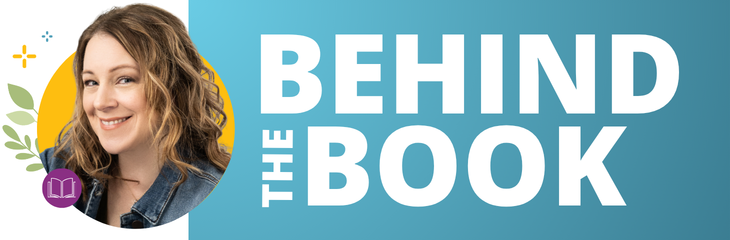
Kelly Ehlers is an award-winning entrepreneur, marketing visionary and author with more than 25 years of experience shaping brands and challenging the status quo. She's the creator of Nice Girls Win, a book and movement proving women don't have to become harder, louder, or less human to succeed.
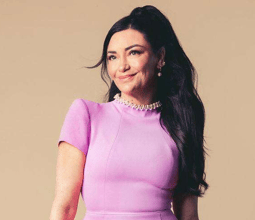
Ehlers is the founder and CEO of The Evoke Agency, an award-winning social, digital and PR agency; and the founder and publisher of The Tease, a modern media company redefining beauty and salon-professional culture. She's built and scaled multimillion-dollar companies by leading with bold ideas, relentless optimism and kindness with a spine.
We spoke with the author about redefining success on your own terms, leading with kindness and clear boundaries, and what it really takes to build a book and a movement.
You’ve had a wildly successful career in business. When did you realize your past version of success was costing you something?
I built two multimillion-dollar companies (digital marketing agency and media company), won the awards, grew an incredible team, and created a career I was proud of. From the outside, it looked like success. But internally, I'd reached a point where I could no longer tell where the business ended and I began.
I'd become very good at carrying everything, fixing problems, and making sure everyone else was okay. That version of success was built on self-abandonment. It was costing me my energy, my identity, and my ability to enjoy what I'd created in the first place.
At 47, I found myself staring at a blank page and asking a terrifying question: What do I actually want now, or, said differently—deserve?
That question changed everything. I realized I didn't need to walk away from my ambition. I needed to stop disappearing inside it.
You argue that kindness can be a competitive advantage. Can you share an example where being the kinder person produced a better business outcome?
The best proof is in the businesses I've built. Some of Evoke’s client relationships have lasted more than a decade, and several members of my leadership team have been with me for 10 to 14 years. One even started as an intern.
That happens because people feel respected, heard, and valued. They trust you to tell the truth, solve the problems, and stay at the table when things get hard.
And I’ve done all of this with kindness. When you're in a leadership position and use kindness as your foundation, it lowers defenses, creates loyalty, and gets people working toward the solution instead of protecting their egos.
Used intentionally, kindness is a business strategy… and it can be lethal.
Tell us about the creative process of writing your book. Did you learn anything about how you work best? Were there any particularly difficult or fun chapters to write?
I'm naturally a very fast-moving person. I build, decide, and execute. Writing required a different kind of discipline and understanding, especially since I’ve never written a book! I had to have a complete beginner’s mindset. Once I started, I had to revisit lessons and stories from my past and decide what I wanted to share with readers. And that’s not an easy thing. Imposter syndrome comes up. Will people care about this? Will it resonate? Am I helping the reader enough? Will it make a difference?
The hardest part to put on paper wasn’t being fired for being pregnant—or even the six-year legal battle that followed. It was the introduction. It was admitting to the world that I'd been in a dark place. At the time, that struggle was silent. Private. Invisible to almost everyone around me. Now, the world knows. And while telling that truth terrified me, it also showed me something powerful: even in the darkness, I was already becoming the woman who would build two companies—and write this book.
The most energizing chapters were the ones about invisible contracts, boundaries, and the Strategic No. Teaching other women how to stand up for themselves kindly but powerfully was also a potent reminder to do the same for myself.
The biggest lesson was that I write the same way I lead: I have to tell the truth first. The structure comes after.
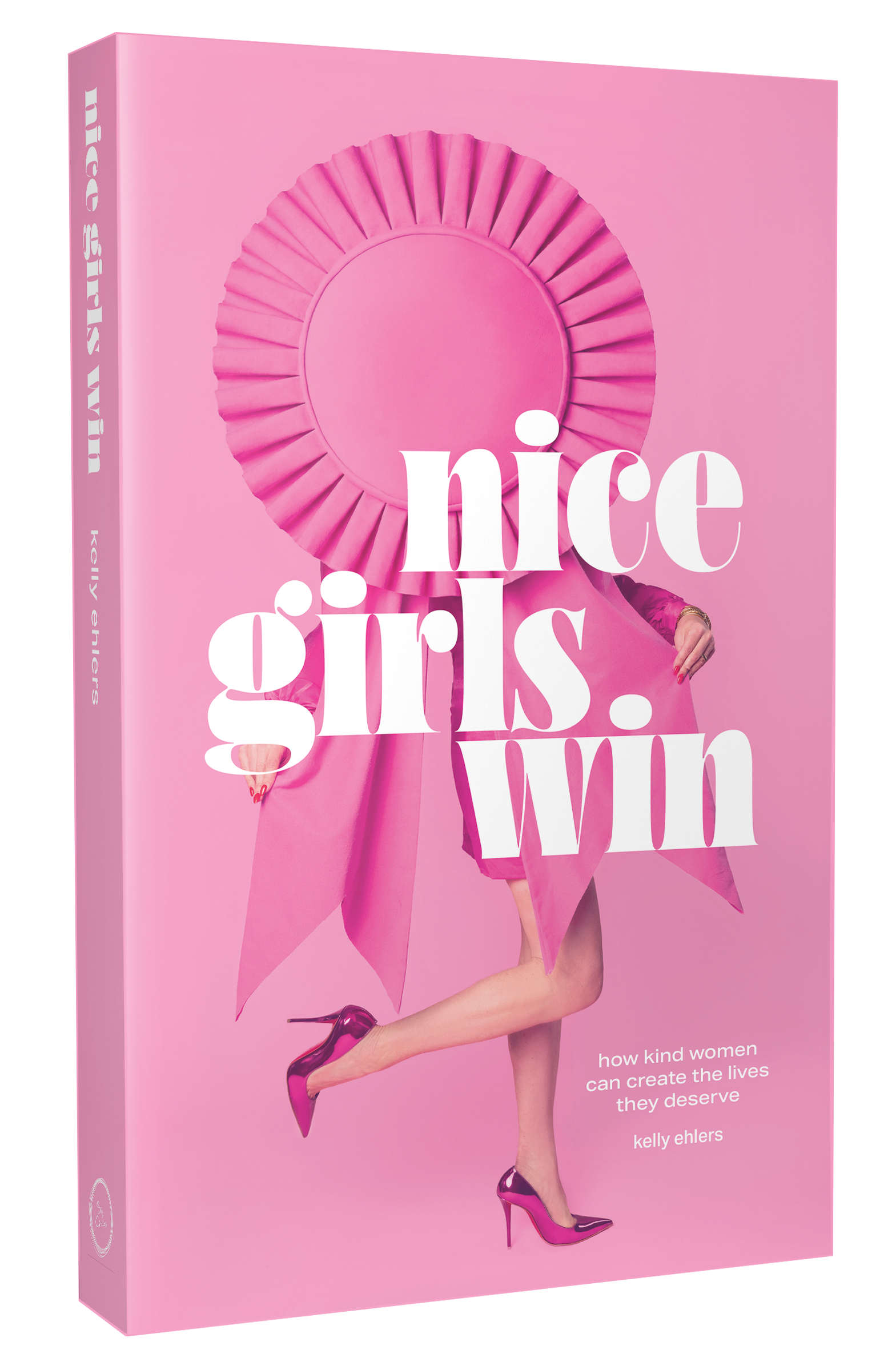
Ready to start winning on your own terms? Check out Kelly's empowering self-help book on leadership, confidence, and authenticity in business.
The book includes a “Permission Slip.” Why was giving women permission such an important part of the framework?
Women are constantly waiting for permission without realizing it.
Permission to say no. Permission to change their minds. Permission to stop overexplaining. Permission to want more. Permission to want something different. Permission to disappoint someone without abandoning themselves.
The Permission Slip makes that invisible waiting visible. It asks women to stop looking outside themselves for approval and write down what they're finally ready to allow in.
It sounds simple, but it can be radical. Sometimes the life-changing moment isn't someone telling you what to do but realizing you were always allowed to choose.
You're not asking for permission. You're making a decision.
What is one piece of conventional leadership advice you now believe is particularly bad advice for women?
“Toughen up.”
Women have been told that leadership requires us to become harder, louder, and less emotional. I completely reject that idea.
You don't need to become someone colder to be taken seriously. You need clear standards, strong boundaries, and the confidence to communicate both.
Empathy helps you read the room. Kindness helps you control the temperature. Emotional intelligence helps you understand what people need in order to move forward. Those are leadership advantages.
The answer is not to toughen up. It's to stop confusing kindness with weakness.
You talk about “invisible contracts” in your book. What are they, and what was the hardest one you had to break?
Invisible contracts are the silent agreements we make without ever consciously agreeing to them in the first place.
If I work harder than everyone else, I'll be safe. If I keep everyone happy, I'll be loved. If I never need help, I'll be respected. If I prove myself one more time, I'll finally feel worthy.
No one hands us these contracts, but we organize our lives around them.
The hardest one for me to break was believing that my value came from being the person who could carry it all. I'd built an identity around figuring shit out. That strength helped me survive, build businesses, and lead through enormous challenges. But eventually, it also became a trap.
Breaking that contract meant understanding that I could still be capable without being responsible for everything. I could be needed without being consumed.
What's a sentence women should stop saying at work immediately? And what's a sentence they should start saying instead?
Women should stop saying, “Yes, I can do that,” before they've even considered what the yes will cost them.
Instead, start saying, “Let me think about that and get back to you.”
In Nice Girls Win, I call this exercising the Silent No. You don't have to respond immediately. The pause gives you time to decide whether the request deserves your yes.
Stop handing out automatic yeses.
What do you most hope readers take away from this book?
I want women to feel shaken awake…shaken!!
I want them to recognize every place they've been shrinking, apologizing, over-functioning, controlling, or honoring an invisible contract they never agreed to.
Most of all, I want them to understand that they don't have to become harder to win. They don't need to trade their warmth for authority or their humanity for ambition.
Nice Girls can be kind and commanding. Generous and boundaried. Warm and wildly successful.
You can stop apologizing for existing. You can take up space. You can win on your own terms.
What surprised you most about your experience with IngramSpark that other authors should know?
What surprised me most was how much publishing is really an operations business—and how valuable the right partners become along the way.
IngramSpark gives independent authors extraordinary access to the same distribution network used by major publishers. Their team was knowledgeable, responsive, and incredibly helpful as I navigated the many moving pieces. Still, access alone doesn't create demand. Your metadata, pricing, return settings, publication dates, files, and retailer outreach all have to work together.
I also learned to build in more time than you think you need. Proofing, corrections, and distribution updates don't always happen instantly. Order a physical proof, examine every page, and never assume the digital file tells the whole story.
IngramSpark and its team can help put your book into the system and guide you through the process. As the author, it's still your job to give booksellers and readers a compelling reason to pull it through.
What's one misconception people have about indie publishing today?
The biggest misconception is that indie publishing is as simple as writing a book and uploading a few files. It's incredibly complex and wildly multifaceted.
You're essentially building a publishing company from the ground up. Editing, design, production, distribution, metadata, pricing, retail strategy, publicity, and marketing all have to work together. Every decision affects the next one.
I have built two multimillion-dollar businesses, and I was still stunned by how much there was to learn. You need to surround yourself with experts, ask a million questions, and be willing to figure things out as you go.
Indie publishing gives you tremendous creative control, but you earn every bit of it.
What are you most excited about or looking forward to personally or professionally at the moment?
Honestly? Changing the world.
I didn't write this book to have it sit nicely on a shelf. I wrote it to shake women awake. To challenge them to do the hard work, walk through the fire, and come out knowing exactly what they deserve from this life. Then go get it.
I said out loud what many women will not say or are afraid to admit. Now I'm most excited to see what happens when they recognize themselves in these pages, stop abandoning who they are, and start choosing the lives they actually want.
This is bigger than a book. It's a movement.