Cassie Steward's second novel, Wild Summers, is a coming-of-age story of rebellion, rock ’n’ roll, and self-discovery set in London 1969, as seventeen-year-old Joan Summers is swept into the bohemian world of Eel Pie Island.

Steward writes rich, character-driven fiction that explores family, relationships and secrets. Before writing, she worked as a celebrity make-up artist, a job which took her around the world meeting amazing people and seeing incredible places. Her debut novel, Number Thirty-Two, became a TikTok sensation praised by readers around the world for its emotional depth and memorable characters. She now resides in Cheshire and is writing her third book.
We spoke with the author about how she creates her characters, why she chose the setting for her latest novel, and what's up next for her.
Your books seem to resonate because readers become deeply invested in your characters. What's your approach to creating a cast of people who feel authentic and three-dimensional?
Thank you! When I first sit down and start to write, I generally do it without any kind of plan. I have the initial idea, usually based around a place or a time period. Then I think about whose perspective it might be the most interesting from. I explore from there, and pretty much make it up as I go along, so whilst it can mean that the book comes together quite slowly and many thousands of words are cut along the way, it also means it happens very organically, and I come to know quite a lot about the characters I’m writing. There is nothing more interesting to me than people and all of their complexities. All of the ways in which we’re different.
What part of the writing process do you genuinely enjoy, and what part do you simply endure?
I enjoy all of it (at points!), but I find the first draft the most difficult part, which surprises a lot of people because it’s supposed to be the fun bit. Because I write without an outline, there’s lots of getting stuck and writing myself into corners that it can take days or even weeks to get out of. It can be intensely frustrating. But I’ve learned that the answers do always come, however long they take, and there’s nothing more satisfying than those eureka moments. I think, though, my favourite part is actually the editing. Really working out how the story hangs together, moving things around, and then sharpening it up on a sentence level.
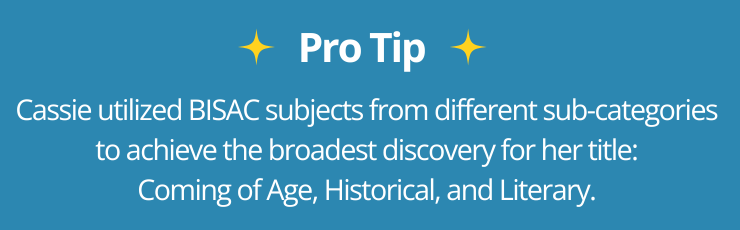
What has surprised you most about your experience with IngramSpark that other authors should know?
The thing I particularly appreciate about IngramSpark is the accessibility of human support.
In a world where customer service is increasingly hidden behind what feels like endless layers of automated systems and AI chatbots, IngramSpark stands out for making human support genuinely accessible.
Being able to speak to a real person when dealing with issues that require understanding and judgement is invaluable. (Big shout out to Rachael, account manager extraordinaire!)
Your debut, Number Thirty-Two, found an enthusiastic readership. Did writing a second novel feel more liberating or more intimidating?
It was so much more intimidating! When I wrote Number Thirty-Two, it was a passion project. I had no idea what it was, no expectations for it, and very little idea about the ‘rules’ of writing. Therefore, I broke a lot of them without ever realizing. Nobody was more surprised than me when it took off the way it did! And it was amazing, of course it was, but when it came to writing the second novel, I really struggled with the weight of expectation, knowing that people were waiting for it. I didn’t want to let anybody down.
Wild Summers is set during the pivotal summer of 1969. What made that particular moment in history feel like the right backdrop for Joan's story?
The time period for Wild Summers was initially dictated by the real series of events that inspired the story. Eel Pie Island is a real place, a tiny island in the middle of the River Thames in Twickenham, and in the 60’s it was a mecca for local teenagers as so many bands played there. Real rock ‘n’ roll royalty – The Rolling Stones, The Who, and Pink Floyd, among many others. These gigs were put on in the dancehall of a dilapidated Victorian hotel and in 1969, people began to move in to the hotel’s rooms and created a small community for a couple of years until the hotel’s eventual demise. I fell completely down the rabbit hole, research-wise, and I had so much to go on. But I knew I wanted to condense the story into one summer, and 1969 felt perfect. The country was on the cusp of so much change. The post-war generations were challenging so many traditional ideas about authority, sex and personal freedom. And, of course, there were their elders, who had lived through the war and its trauma, and come of age in a completely different world.
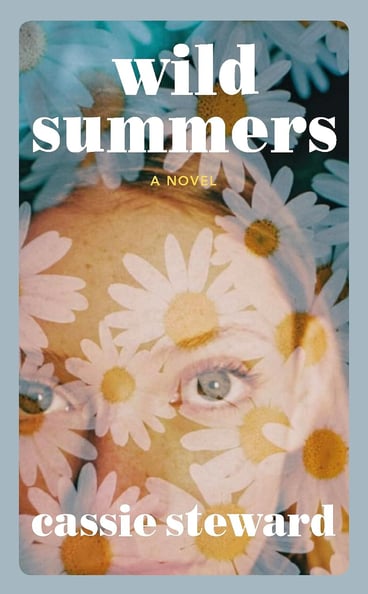
Ready to get swept up in the summer of ’69? Dive into Wild Summers!
If Wild Summers had an official soundtrack, what songs or artists would absolutely have to be on it?
All of the 60’s greats…The Rolling Stones, of course, who were at number 1 in the UK with 'Honky Tonk Women' for five weeks of the summer of 1969.
When readers close Wild Summers for the last time, what do you hope stays with them?
The characters. I hope that people have been invested enough that they want to know what happens next. And also, the place. Researching this book was an absolute pleasure, and I was lucky enough to be able to write so much of it from Eel Pie Island itself, which is genuinely such a magical place. I hope that people will finish the book and want to find out more about it, maybe even go on to visit on one of the artists’ open studio days, which happen twice a year.
What's one misconception people have about indie publishing today?
Oh, there are so many! The biggest two, for me, would be these: that authors shouldn’t expect to be able to make a living from their books, and that self-publishing is always a secondary option to traditional publishing.
It’s absolutely possible to make a good (great, even!) living from your books alone. I’m living proof of that. The landscape of the industry has changed so much over the past decade, and self-publishing is such a viable route with so many advantages.
What advice do you have for aspiring authors?
The best piece of advice I’ve ever been given was surprisingly simple: trust your instincts. Most of us are readers long before we’re writers, and I truly believe we naturally absorb so many aspects of storytelling from the books we read. It’s easy to get bogged down by the so-called rules of writing, to your story’s detriment. Break rules if you want to. It’s your story, no one else’s.
What’s your favorite genre to read? Do you gravitate toward content similar to what you write or something completely different?
My favourite genres to read are historical fiction, literary fiction, and book club fiction. I love emotional books. Anything with memorable characters that makes me cry is a winner. And it’s exactly what I want to write, too.
What’s next for you? What are you most looking forward to personally or professionally at the moment?
I’m currently juggling a book tour with the school summer holidays which is pretty full on, but I’m so enjoying visiting the book shops and festivals I’ve been invited to, and having the chance to meet so many readers. No matter how busy it gets, every day I wake up feeling lucky. After that, I’ll be holing up to finish book three, which revisits some of the Wild Summers characters in later years. I’m not ready to let go of them just yet!