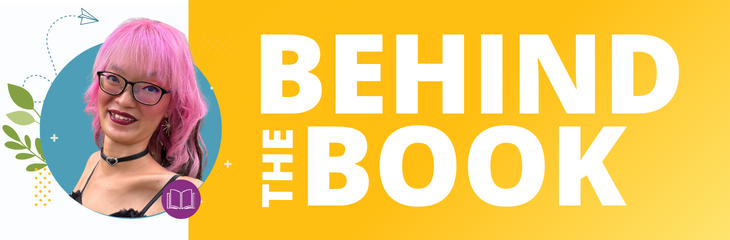
Randi Smith is a proud member of Authors Against Book Bans and the Independent Book Publishers Association. Her YA novel Ada Holloway's Had Enough follows a high-school senior whose research project leads her to a banned book and inspires her to launch a secret library book club that champions the freedom to read.
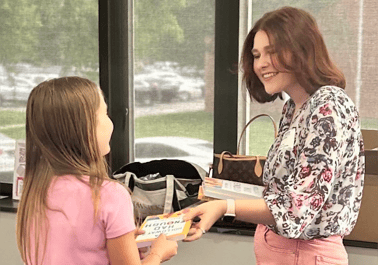
Smith first discovered her love of writing after self-publishing a short novel in high school, which inspired her to pursue a Bachelor of Arts in Publishing from Belmont University in Nashville, Tennessee. When not trying to meet her word count goal, she works at her local library. Besides her passion for all things reading and writing, Smith is an avid lover of astronomy, orcas, and the color purple. A Kentuckian, born-and-raised, she still calls the Bluegrass State her home. She currently lives in her hometown with her many rescue cats.
We spoke with the author about her journey to becoming a published author, the role libraries play in their communities, and the connection between finding your voice and protecting the freedom to read.
Banned Books Week is about the freedom to read, but Ada Holloway's Had Enough is also very much about finding your own voice. How do you see those two ideas connecting?
I believe that we can only find our own voice when we have the freedom to do so, which includes exercising our freedom to read. So much of growing up is discovery—new people, places, passions, and experiences—which includes reading about both the world around us and fictional places. When we have the freedom to explore these new ideas, we have the freedom to figure out who we really are and how we want to contribute to our communities.
Ada begins the story as a fairly reluctant rule follower. Why was she the right character through whom to tell a story about censorship?
I think, even if we don’t really want to admit it, Ada is all of us. Even if we don’t understand the rules or don’t agree with them, we still follow them. It gives us a sense of purpose and belonging. As Ada discovers, questioning those beliefs isn’t easy, but sometimes it’s also the right thing to do. I believe most of us feel the same way. We like having structure, and it’s hard to confront the realities that those rules aren’t always for the best, which is why Ada is the most inspiring, perfect protagonist to follow.
Tell us about the creative process of writing your debut book. Did you learn anything about how you work best or any rituals you like to follow?
I had the unique experience of writing the first third of this novel as a final project in my last semester of college, which is what I remember most, actually. Sitting at the desk in my residence hall, I churned out pages and pages with only the occasional noise of passing students to distract me. This was where Molly Ingram spontaneously popped into existence in chapter four. The rest of the novel was much tricker. It was an exercise in What do I need to do to make it through this? I tried just about everything: using candy to bribe myself into working, listening to music, complete and utter silence…yeah, everything. I’m still trying to figure out my own rituals, but the secret is that I kind of enjoy trying new things and seeing what sticks. It’s fun!
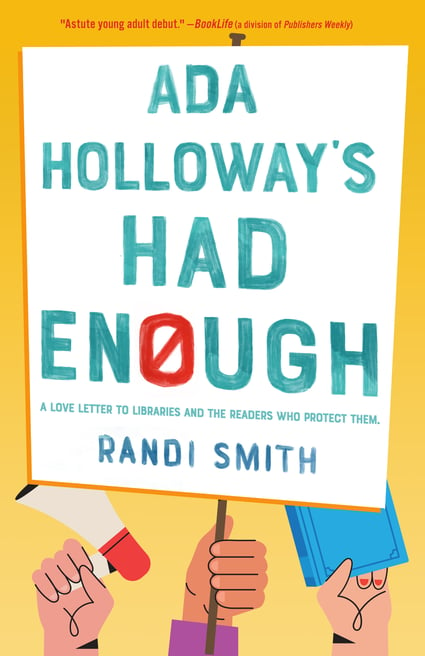
This Banned Books Week, pick up Ada Holloway’s Had Enough and follow Ada as she finds her voice and fights for the freedom to read!
How did your experience working in a library shape the way you portrayed that setting and the people who work there in your book?
As embarrassing as it is to admit, I didn’t really “do” libraries before working at one. I appreciated them as an abstract resource I could use but never got around to going to. It was only after working at one that I realized how important libraries are to their communities. I got to see firsthand the types of events libraries hold, how they tailor every collection to suit their patrons' needs, and even how much thought goes into small displays. Whether big or small, every library I’ve encountered shows this kind of love and dedication, so it was my biggest goal to make this setting come to life through the page and show exactly how caring and passionate they are.
Why was this story apt for a YA audience? How did you balance giving the book a point of view on censorship while keeping it grounded in the messy, funny, ordinary lives of teenagers?
It wasn’t always easy, but just looking at the numbers, there’s not a lot of books on modern day book banning and even less geared towards a YA audience—and virtually none that focus on libraries. I knew that the audience most targeted by book bans deserved a book on the topic, but I also knew that no teen wants to read a book that isn’t fun. I hoped that by focusing on Ada, David, and Molly—three passionate but clearly messy teens with real, complicated lives—I could thread the needle between an important story that needs to be told and an actually interesting book. This was at the forefront of my mind every time I turned on my computer.
What do most people not understand about the process of banning books and how it harms today’s young readers?
Most people don’t realize that it isn’t about the books, not really. It’s about robbing families and individuals of the right to choose for themselves. That’s why all anti-book banning arguments use the First Amendment as a defense. Even books with controversial themes serve a purpose—to spark conversation—and taking that conversation away from individuals, especially parents to their children when the time is right, only causes harm, ignorance, and a lack of empathy.
If Ada could speak directly to a teenager during Banned Books Week 2026, what would she tell them about finding their voice and protecting the freedom to read?
Ada would say that, yes, speaking up can be scary, especially about something so controversial sounding as censorship and book bans. But we must make our voices heard to protect ourselves. Book bans target teens for a reason, and only by standing up can we put a stop to censorship and protect our schools and libraries. You may not hold a protest in front of town hall, but you might look for volunteer opportunities, talk with your teachers and librarians, and especially speak with your parents. The American Library Association has plenty of statistics that could come in handy, but stopping book bans is all about starting conversations. Finding your voice is the easiest and greatest way to protect your freedom to read.
What advice do you have for aspiring authors regarding writing, marketing, or any other aspect of the process?
There’s plenty of writing advice out there, but I’ve found that marketing and publicity is the scariest part of becoming an author. With that in mind, the single greatest thing you can do is meet other authors and make writer friends. They are your greatest resource for literally everything—crafting stories, yes, but also introducing you to new people who have experiences you can learn and draw from. Go to conferences and clubs and meet-and-greets. You never know who you’ll be introduced to and what doors will open because of it.
What would you say to a young reader who discovers that a book they want to read has been challenged or removed from their school or library?
Don’t assume anything, good or bad. Your first stop should be to your parents or the librarian to see why the book has been banned. They can help you figure out whether this book is right for you, and (in the case of your parents) help you get access to it another way. Your next stop should be to report this censorship to the ALA or PENAmerica. They keep statistics on every book ban in the country, and these statistics help shed a light on the problems censorship causes. Finally, talk about it! The key to stopping book bans is to make your voice heard so change can happen.