
When writers are deep into drafting, formatting, and fine-tuning their metadata, the idea of an author photo can often fall to the bottom of their priority list. And honestly, that makes sense. A lot of people don’t love being in front of the camera, and seeing your photo out in the world can feel a little uncomfortable.
However, your author photo is more than just a box to check—it can do more to support your marketing than almost anything else on your platform. If getting in front of the camera feels uncomfortable or indulgent, you’re not alone, but a photo you feel good about is part of showing up for your work and your readers.
That Headshot? It's Your Readers' First Impression
Think about the last time you clicked on a new author's website or Instagram profile. Chances are, before you read a single word of their bio, you looked at their face. That's just how humans work. We connect with people, not just words on a page.
Your author photo is the very first impression a reader gets of you, and first impressions happen fast. A grainy, outdated, or overly stiff photo can unintentionally hide all the warmth and personality you've poured into your writing. On the flip side, a polished, high-quality photo where you truly look like yourself, approachable, relatable, someone a reader would want to grab coffee with, does a lot before you've said a single word.
A few things separate a headshot that works from one that just... exists:
- High-resolution and well-lit. Your photo needs to hold up whether it's a tiny website thumbnail or the back of a printed book jacket. Natural light or soft studio lighting goes a long way, while harsh shadows and blown-out highlights don't.
- Genuine and approachable. A relaxed, warm expression with real eye contact almost always outperforms a stiff, overly formal pose.
- On-brand for your genre. A cozy mystery author and a thriller author probably shouldn't look the same in their headshots. Your photo should hint at your vibe before a reader even opens the book.
- Recent and consistent. Update it every couple of years so it still looks like you, and use the same photo (or a matched set) across your website, socials, and author pages so readers recognize you at a glance.
Here are some examples of author photos that work well, followed by a quick checklist for what specs make up the ideal author photo:

Quick Specs Checklist: The Ideal Author Photo
- ✅ Resolution: Minimum 300 DPI, at least 2000 x 2000 pixels for the master file
- ✅ Crops to have on hand: Square (1:1), portrait (4:5 or 2:3), and landscape (16:9 or 3:2)
- ✅ Framing: Head and shoulders, subject filling 60–70% of the frame
- ✅ Eye placement: Upper third of the frame, not dead-center
- ✅ Background: Simple and low-contrast
- ✅ Lighting: Even and soft — no harsh sun or backlighting
- ✅ Focus: Sharp on the eyes
- ✅ File setup: One labeled master file + exported crops, so updates are easy down the line

It Shows Up Everywhere (So It Needs to Work Everywhere)
Your author photo isn’t just a one-time asset. It’s going to pop up again and again across all kinds of places readers encounter you, so it needs to work well wherever it appears.
Consider how many places that single image will live:
- Your website's About page
- Your social media profiles
- The back cover or inside flap of your book
- Press releases and media kits
- Guest blog posts and podcast show notes
- Bookstore or library event signage
- Amazon's Author Central page
That's a lot of ground for one photo to cover, and it's exactly why resolution matters so much. A photo that looks fine as a tiny thumbnail can look pixelated and unprofessional the moment someone blows it up for a printed poster or a media kit. Starting with a sharp, print-ready image means you’re not left scrambling for “something that’ll work” when an opportunity pops up at the last minute. You already have a photo ready to go.
Here are some examples of author photos that don't work well:
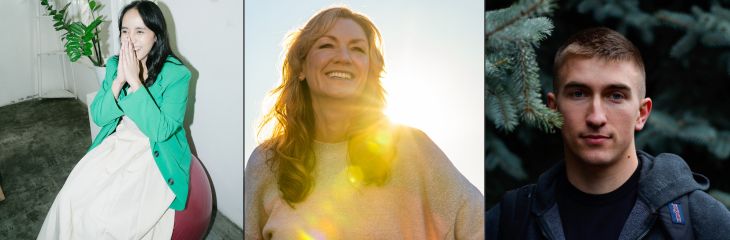
- In the first photo, the author's face is largely obscured. This defeats the purpose of a headshot, which is to connect with the reader through eye contact and expression. The photo also has poor lighting and looks grainy.
- In the second photo, the bright backlighting washes out important detail and leaves her face too shadowed, making her features harder to see, especially at thumbnail size.
- In the third photo, the dark, busy background pulls attention away from the subject, and the tree branch covering part of his face makes the image even less versatile. That can make it harder to use effectively, especially when it needs to be cropped for marketing materials.
While all three are nice photos, they don’t really function as strong headshots. None gives readers a clear, well-lit face with direct eye contact that still comes across clearly at a smaller size.
One Photo Isn't Enough (And That's Okay)
Something else to keep in mind: a single headshot usually isn't enough. It helps to have a small collection of photos to pull from.
Your polished, go-to headshot is important, but if it’s the only photo you use, it can start to feel a little repetitive over time. That’s where lifestyle photos come in. Think of shots like you at your writing desk with a cup of coffee, browsing shelves in a bookstore, out on a walk with your dog, or laughing at something just off-camera. They don’t need to be as formally posed as your main headshot, but they should still be well-lit and high quality.

Why does this matter? A few reasons.
-
Variety keeps your marketing from feeling stale. Newsletter graphics, social posts, blog features—they all work better when you have more than one image to choose from, so you’re not using the exact same photo over and over.
-
Lifestyle photos also tell a story your headshot can’t. A great headshot shows readers what you look like, but a lifestyle photo gives them a glimpse of who you are—your personality, your interests, and the world you write from. That kind of peek feels personal, and it helps readers connect with you beyond the back of the book.
-
They’re also practical. Some situations call for a clean, professional headshot, while others—like a casual Instagram post or a “day in the life” newsletter feature—feel better with something more relaxed and candid. Having both means you’re not trying to make one photo do every job.
No Photography Budget? You've Still Got Options
Just because you want a professional-looking photo doesn't mean you have to pay for an expensive photo shoot. You've got options. There are plenty of ways to get a strong, polished photo without spending a fortune.
-
Watch for affordable pro options before ruling it out. Seasonal mini sessions, local studio specials, freelance marketplaces, or a photographer’s slower-season rates can sometimes get you a professional shoot for much less than a full package. It’s also worth asking around in your community. Local photography clubs, community college programs, and Facebook groups for photographers can be great places to find talented people looking for practice subjects.
-
Use your smartphone, especially if you have good natural light. Phone cameras are more than capable of taking high-quality photos. What matters most is the lighting. Try standing near a large window on an overcast day, set your camera to its highest resolution, and ask a friend or family member to take a few shots. They don’t need to be a pro…just someone with a steady hand and a good eye.
-
Skip the filters, use basic editing instead. You don’t need heavy filters or dramatic retouching. Free tools like Canva, Photopea, and Pixlr are more than enough for basic cropping, brightness adjustments, and light color correction while still keeping your photo natural-looking.
One quick note: While AI-generated headshots have become an option, be sure to approach them carefully. These images can sometimes look a little artificial or too polished, and for many readers, part of the connection comes from seeing the real person behind the work.
A limited budget doesn't have to mean a limited-looking photo. A little resourcefulness goes a long way.
The Bottom Line
Your writing will always be at the heart of your author brand, and no photo can replace that. But a clear, thoughtful author photo that truly feels like you—along with a few lifestyle shots—can go a long way in shaping how readers connect with you.
So if your current photo feels outdated, or you’ve been putting off getting one you actually like, take this as your gentle nudge. It’s a small step that can make a big difference.