
The first step to every film is on the page.
As an independent and contracted film and television producer for the last 16 years, I can attest that there is an unending stream of great ideas for the screen. Which is why Thomas Edison’s quote rings very true for film and TV: “Genius is one percent inspiration and 99% perspiration.”
For context, the average completed independent film takes 7-10 years to go from concept to completion, with an unknown percentage never even getting made. The average studio film (meaning they have the financing in-house to make it) takes an average of 3-5 years. Film development is a long journey.
Producers are only paid once a film is greenlighted (often the first day of production), so they must be willing to work for deferred pay for 3-10 years before possibly getting compensated. I say this not to discourage you, but to help writers understand the level of persistence, endurance, and drive that is required of producers. Even if a producer sees your vision, connects with it, and believes it would be a fantastic film, they can't develop every great idea in the way that it deserves.
And yet, authors can move their projects forward without a producer formally attached, which is why I’m writing this article. What if authors and IP (intellectual property) holders knew how to make their book more attractive for a film or television adaptation?
Here are 3 Simple Steps to improve your chances of having your book turned into a film or TV show that you can do now:
1. Consider the Broader Cultural Connections of Your Book
There are many choices to consider when adapting your book: is it a play, a film, a documentary, a TV miniseries, an ongoing TV show, a podcast, a web series? Or a combination of these?
Let's look at a couple of success stories:
Wicked
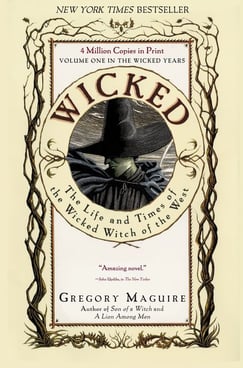 Originally written as a book by Gregory Maguire and adapted into a stage production by producer Marc Platt, Wicked is one of the longest-running shows in Broadway history and has been wowing audiences for over 20 years. Merchandising adds additional revenue to the experience, and it's been wildly successful since Universal Pictures adapted the theater production into a feature film starring Ariana Grande and Cynthia Erivo.
Wicked has one big thing going for it: the film adapted a widely known piece of IP (The Wizard of Oz) into a fresh new take. This immediate recognition to a broad audience gave the book a big leg up in development for a theater production, and that success, over decades, brought a massive film opportunity.
What does this mean for you as an author? Finding intentional connections between your book and widely known cultural topics, events, or interests will help to sell your book for a broader medium. You can see this with book adaptations such as American Sniper (Current War) and The Polar Express (Christmas). While having great sales numbers is immensely important, and can sometimes turn your book into its own cultural phenomenon, often it’s the broader market awareness of the subject matter of a book plus the success in sales that elevates the IP to the attention of filmmakers and studios.
The cultural connection of your book should be front and center in your deck and any pitch.
Sometimes books that were written many years ago find a renaissance in a new time because of the cultural awareness. This is what happened in my next example.
Closed Doors

Written by Lisa O’Donnell, this Scottish novel written in the 80s explores the impact of sexual assault on a family and the surrounding community. During the MeToo Movement, this topic became prescient. So when Jennifer Manocherian came to me with a script based on the book, it struck a chord with a broader cultural movement. We went on to adapt Closed Doors into a film called If I Tell You which screened in several prominent festivals in 2025, and is partnered with RAINN—the largest anti-sexual violence organization in the country. We'll begin preview screenings through GATHR in 2026.
2. Write a Script If You Can, But Create a Deck You Must
I produced If I Tell You because of the timeliness of the subject matter and because the writer, Jennifer Manocherian, had done the work to option the book and write a screenplay. Because it had a script, I was able to offer notes and work with Jennifer to get it to a place where we could submit to directors. We reached out to a director's organization called Film Fatales, and they put a notice out to their large database of female directors to see if anyone was interested in the project. We connected with several directors and ultimately chose to partner with Tessa Blake, a prolific TV director who was in search of her directorial feature debut. From there, we attached actors and went out to financiers and made the film.
Because writing scripts can be very time consuming and expensive, having a good script to attract talent (directors and actors) is very helpful. If writing a script is a commitment you're not willing to make, at a minimum create a deck.
If you’d be interested in what a creative deck looks like when pitching a film, please reach out, but in short, a deck accomplishes 3 major goals:
-
- STORY: Connect an overview of the creative with the timeliness of the content.
- PAST SUCCESS: Why this IP is uniquely amazing—and here’s the proof.
- VISION: Provide comps to other current films and creative ideas for screenwriters (if needed) actors and directors.
Once a production company and director join the project, the deck will (or should) transform more into a visual storytelling experience to attract actors and give a clear view of what the film will look and feel like.

3. Development: Strategic and Consistent Submissions and Follow Up
The steps are here for those who are really willing to put in the time and energy to develop their IP, and that can go a long way toward getting your book made into a film.
- You have a product—do the research: what actors, directors, producers, and financiers are passionate about the genre or subject of your book?
- Send your book with a personal note alongside your deck about why you would value their support in turning this book into a film. Even if you receive general interest, that could be valuable to approaching larger studios, financiers, or production companies about your IP.
- How do you get to the top of the pile? It's very time-consuming for a studio, producer, or actor to read every submission that comes through the door. Having past success or media coverage is helpful, but most exciting to a producer is interest from celebrity actors, financiers, directors, and screenwriters. If I see the script or book has generated significant interest, I'll put it towards the top of my list to read and engage.
- One example of this is a film based on Fannie Flagg’s book The All Girls’ Filling Station’s Last Reunion. Reba McEntire came to our production company to see if we'd option the book with her attached to play the lead. We read it immediately…loved it, optioned it, and the film is now set to go into production in 2026 with Amazon’s Wonder Project.
- Find the right contacts: “That’s nice,” you may be thinking, “but I don’t have a big celebrity in my pocket to dial up whenever I’d like.” While getting past the gatekeepers of managers and agents can and most likely will be an exercise in perseverance, a $200 investment in IMDBpro will provide you with all the managers, agents, lawyers, and PR firms of every actor, director, and producer you could dream up.
- If you're represented by an agency, engage your agent to reach out. Additionally, keep up with the trades that make mention of overall and first-look deals with streamers and studios. Submitting to these companies is easier than dialing up Netflix, and Netflix is incentivized to like what they bring to them. (If you have the time, you can move the ball a yard down the field).
Perhaps you’re thinking, “That sounds like a lot of work.” And you’re right, it is. The producer of Gran Torino, Jennette Kahn, explained making a film as carrying water uphill with your hands.
Let’s also discuss financial expectations. Again, independent producers like myself only get paid when our films are greenlighted and in production. Unless your books have sold serious numbers, the money paid for an option will likely be marginal. Like the producer, your payment for the full option will come when the film goes into production.
Because of the need for producers to have several projects in various stages of development, production, and distribution, when we see an author is willing to pull up their sleeves and work to make it happen, it's a real value add.
As the writer, you're the originator of every film, and it can't happen without you. If you're particularly passionate about seeing your work adapted to screen, these are very simple steps every author can take to make that a reality.
Truthfully, I’m in awe of our creative diversity, and am cheering on every one of you because I know how hard it is to be a storyteller in our “attention economy," where soundbites and social media drain hours out of our demanding schedules. I'm the first one to hope that we can be a culture that values reading and watching long-form storytelling. It's this storytelling work that connects to a different part of our brain, and unlocks our compassion and humanity in ways 30 second clips never could.
So keep writing, and keep advocating for your writing! The first step of every film is found on the page.