

David Loux is the author of Chateau Laux, a critically acclaimed, award-winning novel that tells the story of a shocking incident in eighteenth century America.
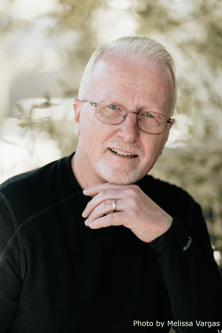
His second novel, The Lost Seigneur, expands on the themes detailed in Chateau Laux and completes the story of a French family’s migration to America in the eighteenth century. He lives in the Eastern Sierra with his wife, Lynn.
We talked with the author about his inspiration for turning family history into historical fiction, how he approaches the craft of writing and revising his novels, and what he's learned about the business side of being an independent author.
Your novels have an interesting origin story, beginning as family history rather than a plan to write fiction. When did the inspiration strike to turn your research into a novel?
My inspiration for the Chateau Laux series came during my research regarding the Laux surname, when I learned of a tragic incident in the first generation of my family in America. We experience violence all the time as part of our entertainment culture and become inured to it to some extent. But when I found out what happened to my first-generation sister and her young toddler, it broke my heart. It haunted me. Finally, I chose to explore it through fiction in an attempt to answer the question of how a close-knit family could live with such trauma.
How did writing the sequel differ from writing your first book Chateau Laux? Did you already know how the family's story would end, or did your imagination surprise you along the way?
Inspiration for Chateau Laux came in the form of an unforgettable event that haunted me, as previously indicated. That said, writing is a process and one thing led to another. I thought I knew how the story would end, but I was wrong. Stories are living things. They breathe and whisper, and if you listen, they can lead you to unexpected places. This was the case with Chateau Laux.
As a sequel to Chateau Laux, The Lost Seigneur was not predicated on the tragic event that inspired its predecessor, and I was able to devote my efforts to thematic development. I knew in general how the story would end, but as in the case of Chateau Laux, the prose had a mind of its own.
Do you have any writing rituals or creative habits that have become essential to you?
I don’t have any rituals, per se, but try to maintain an attitude of mindfulness that takes into consideration my weaknesses. One of the things that I do as a matter of course is to treat multiple drafting as an aggressive writing tool rather than merely an editorial process. The first draft usually establishes the structure and is far from publication readiness. Subsequent drafts layer in thematic development and add finer detail to the content. A lot of “good writing” gets discarded, and new content is added as necessary.
I should say that one of the mistakes that I made as a young writer was sharing manuscripts before they were ready. It's easy to fall into this trap because we're naturally excited about what we create. Now I typically don’t share until after the second draft, and life is a lot easier.
With work based so deeply in research, how do you balance historical accuracy with the needs of compelling fiction?
One of the challenges that accompanies extensively researched subject matter is how to present information in a way that keeps the reader engaged with the story. My approach has been to adopt an omniscient narrator within a chosen POV, such that the narrator knows what the chosen character could be expected to know, which is different from a narrator who knows everything. Every now and then, I have to violate this narrative position, but I do my best to keep these departures to a minimum.
Many historical novels use famous figures as anchors, but yours focuses on ordinary people living through extraordinary events. Why is that perspective important to you, and why do you think it resonates with readers?
Anchoring historical novels on famous historical figures is a very effective way of bringing the past to life in an exciting, entertaining, and informative way. That said, focusing on lesser-known individuals brings the narrative closer to home, so to speak. Readers may not be familiar with a lesser nobleman who fled southern France to build a life on the Pennsylvania frontier, but the Dragonnades and the horrors of the Inquisition were very real. Similarly, they may not have known about Catharism, but they can relate to a young girl kneeling by her bed in the cold chill of dawn, clasping her hands, and asking God why life had to be so hard. What makes the characters memorable is the extraordinary times they lived in. Their story is a legacy fiction of whom we have become.
Have you received any particularly memorable or meaningful reactions from readers that have stuck with you?
The Lost Seigneur is a legacy fiction about a family that heals itself. Two of my reviewers shared that they experienced healings from personal trauma by reading the book, and this has meant more to me than I can say.
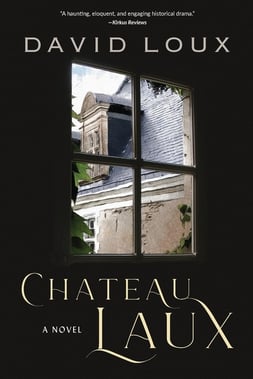
Dive into David’s gripping historical fiction duet based on his own family:
-png.jpeg?width=252&height=378&name=9781954065048_FC%20(2)-png.jpeg)
If The Lost Seigneur were adapted for film or television, which scene would you be most excited to see brought to life?
There are many dramatic scenes that I'd like to see brought to life. But it would be especially wonderful to see the closing scene of the book, where the family reunites and reconciles. It was difficult to write, but I've found that the most difficult scenes to write are often the most satisfying when they finally work.
Beyond writing, what's been the biggest skill you've had to learn as an independent author?
While being an independent author has certain advantages, it also bears an enormous burden of responsibility. Just as the skills you have as a writer enliven your work, the editorial and design choices you make affect the overall perception of quality and the publishing platform that you choose determines avenues of distribution.
Your comfort zone may be that of a writer, but you have to think like an entrepreneur, which has its learning curve.
What surprised you most about your experience with IngramSpark that other authors should know?
You have to be clear about your goals. As a print on demand platform, IngramSpark offers distribution through libraries and any number of retail outlets. This is a great service. But if you want to see your book in brick-and-mortar stores, you have to bear in mind that IngramSpark is not a traditional distributor and does not offer such traditional services as a sales team to pitch for you. You would have to do your own marketing and promotion.

What advice do you have for other authors in the midst of their own publishing journeys?
Be fearless. Accept that you will make mistakes. Believe in yourself, even if others give you passing notice. If your goal is to get published by an established publisher, accept that rejections are preludes to success.
If your goal is to publish your own work, have faith that you can do it. There are plenty of resources available to indie writers. Use them.
What's one misconception people have about indie publishing today?
Getting published by a major publisher offers an ipso facto stamp of approval that indie publishing does not. I actually had a reviewer who gave me high marks because she couldn’t find anything wrong, which was a backhanded compliment. But just as there are some books by major publishers that are lacking, there are indie titles that are outstanding. Be brave and have a sense of humor.
What are you most excited about these days?
I am most excited about the third and final book in the Chateau Laux series, which is in progress.
What’s your favorite genre to read? Do you gravitate toward content similar to what you write or something completely different?
I was a heavy consumer of fiction as a child and young adult, often reading a book a day and sometimes more. Nowadays, my reading pace has slowed considerably, and I mostly read the books of friends and associates, which cover multiple genres. I also read a lot of natural history and historical nonfiction. I joke about it, but it is nevertheless true that the older I get the more the past has a hold on me.
Do you have an author or book that was inspirational to you or that you feel has influenced your own writing voice?
I had an identifiable writing voice even as a child, when I wrote poetry, so I can’t attribute it to any particular author. That said, different writers have spoken to me during different phases of my life, such that their work remains on my spiritual bookshelf even though my tastes may change. The first novel that I ever read was by Jack London, and for this reason he will always have a special place in my heart. Similarly, I read The Good Earth and had the privilege of meeting Pearl Buck soon thereafter, which I will carry on my memory card for the rest of my days. Other writers I have loved include Willa Cather, Paulo Coelho, Jean Rhys, Maya Angelou and of course Nathaniel Hawthorne, who told compelling stories with an abundance of heart. The list goes on.