

Dr. Helena P. Schrader is an award-winning and bestselling author whose novels set in the Middle Ages are based on the historical record but also incorporate the insights gained from modern archaeological surveys.
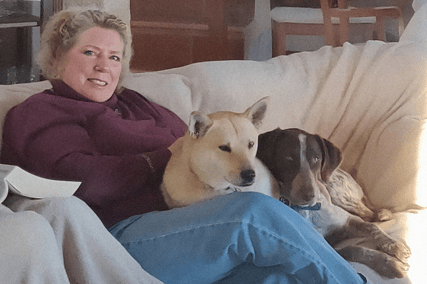
Dr. Schrader holds a PhD in history from the University of Hamburg and served as an American diplomat in Europe and Africa. Her chief areas of expertise are Aviation, Ancient Sparta, and the Crusader States. The Tale of the English Templar won the Grand Prize for Fiction in the IndieReader Discovery Awards 2026. Set during the downfall of the Knights Templar, this richly researched novel follows an English Templar caught in a struggle for justice, faith, and survival.
We spoke with the author about what she values most in the freedom of self-publishing, how she balances documented history with imaginative storytelling to create convincing historical fiction, and why the fate of the Knights Templar continues to echo in conversations today.
What is your favorite part about being an indie author and the journey of the self-publishing process?
I love self-publishing because it liberates the author to be creative, innovative and, above all, authentic. The major commercial or 'traditional' publishers are in business to maximize profit; they don't care about literary quality, moral value or creativity. If I were chasing after a contract from a 'traditional' publisher, I'd have to conform to literary fashion and 'current political correctness.' In fact, I'd have to strive to write 'like' some other author who recently became a 'best-seller.'
But I don't want to write like someone else. I have my own voice, my own stories, my own style and my own insights that I wish to share with readers.
As a historian, where do you draw the line between documented fact and informed imagination when writing historical fiction?
I am fanatical about keeping the history in 'historical fiction.' The vast majority of readers are not historians; they rely on the author to be honest with them about what happened in earlier epochs. A book should not call itself ‘historical’ fiction if it alters major historical events and outcomes or if it fails to convey the overall atmosphere, conditions, and ethos of the age in which it is set.
That doesn't mean a novel needs to be accurate right down to the tides, phases of the moon, or weather on a specific date. It doesn't mean an author has to understand (much less explain!) the details behind the technology of the age, e.g. know how the dyes were produced for the fabrics worn and the like. In fact, a novel that gets all those kinds of details right can still be utterly ahistorical if it misrepresents the legal systems, theological beliefs, social customs, or sexual relations of the era. If you have knights talking and acting like American cowboys, it doesn't matter if you know the name for every segment of plate armor! I'd rather have a novel that is authentic in tone, culture, and interpersonal relations, but with minor inaccuracies regarding technologies or tides, than the other way around.
Why do you think the fall of the Templars still resonates more than 700 years later?
This novel is as much about people suffering under today’s authoritarian regimes as it is about 14th-century France. Chillingly, I was told by victims of 20th-century dictators that this novel captures the psychological state of survivors of such institutionalized abuse. The greed, the cruelty, the cold-blooded use of terror, the corruption of the judicial process and state-sponsored torture continues today, but the 'evil empires' are no longer safely confined to history or foreign shores; they are on our very doorstep in the form of ICE detention centers. In addition, Trump is using his administration to senselessly demolish highly effective and valuable institutions for the sole purpose of obscenely enriching himself and his cronies.
What was the initial inspiration for writing this book?
The opening scene was the inspiration. It came to me. I saw it in my mind. I felt it in my gut and heart…and then I had to figure out who the characters were, how they got there and what happened to them afterwards. Most of it just flowed onto the page (screen). I never really knew what was coming next until I sat down to write it. I knew the history. I knew where the book had to end. I knew the key historical events that had to be included and addressed, but the fictional part, how the characters would be involved, interact and what they would say, only came to me while writing.
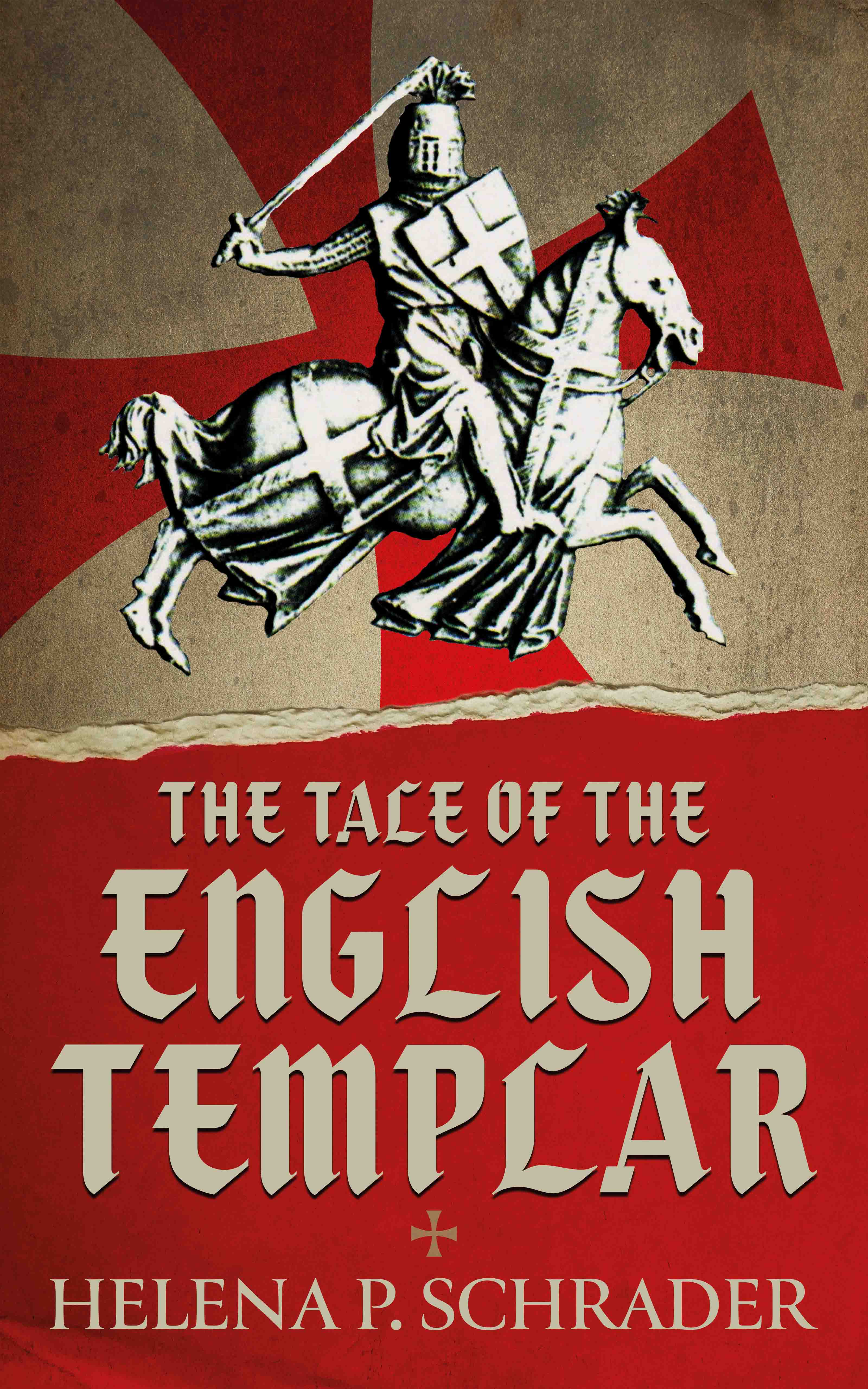
Experience the drama, danger, and resilience of a story rooted in real historical events with Helena’s award-winning book
If readers finish the novel with one new understanding of the Knights Templar, what do you hope it is?
It would be nice if readers could take away the fact that the Templars were destroyed not for crimes they had committed but simply because a greedy king wanted their riches. The Templars were not guilty of any of the allegations made against them, and to underline that point, on 25 October 2007, Pope Benedict XVI officially declared the Knights Templar innocent.
What do you want people to take away from your work as a whole?
Christ told us to "Love Thy neighbor Like Thyself." The heroine of The Tale of the English Templar adheres to this basic canon of Christianity with childlike fidelity. She is not self-righteous about it; she simply cannot do otherwise. When the novel opens, she is a teenage maiden full of life and love. She is no saint. Yet there is one thing she cannot do: she cannot abandon a helpless human in desperate need of aid. Because of this, she sets off a chain reaction that results in men risking their lives and freedom and takes her to a prison cell in Avignon. Felice de Preuthune does not don armor or wear men’s clothing. She is not rebellious or full of anachronistic notions of women’s rights. She is a devout, modest, and obedient medieval maiden. Yet she is also a Christian soldier in the struggle against injustice and tyranny. She is part of the resistance to tyranny that is the soul of this novel, but she also fights unceasingly to defeat hatred in human hearts. She should be an inspiration to us all.
You have written both nonfiction history and historical fiction. What can a novel reveal about the past that a scholarly work cannot?
Historical fiction, when rooted in history rather than based on fantasy or ignorance, can enhance the historical record by extrapolating between known facts. It can offer plausible hypotheses for events and developments that are otherwise inexplicable. It expands upon recorded history by examining motives, relationships and psychological factors absent from archival and archaeological evidence. Good historical fiction enriches our understanding of the past, and often inspires readers to dig deeper into the facts or to read primary sources. It can make history more comprehensible and meaningful by engaging readers' emotions. It enables readers to feel sympathy for people living in the past and thereby contributes to the human capacity to see different points of view. Like all fiction, it increases our understanding of others.

When you look at your own work, what aspect of your writing do you think critics and readers don't talk about enough?
The themes. Readers tend to be fascinated by the worlds I describe. The rigorous level of historical accuracy, because it has become exceptional, is consistently praised and commented upon. Yet for me, the setting is only the background. My characters are humans, and their challenges and choices are our own.
What advice do you have for aspiring authors in the indie space regarding writing, marketing, or any other aspect of the process?
If you self-publish, you have to be your own marketing agent. Actually, even if you don't self-publish, authors nowadays are expected to contribute to marketing. And, yes, you can outsource some marketing, but the bottom line is you have to have a marketing strategy, a marketing plan, and be prepared to spend as much of your time marketing as you did writing.
I know that sounds terrifying. I used to protest: 'But my books are my children, and what loving mother can sell her child?' That is the wrong attitude.
If your books are your children, you need to give them a good start in life by dressing them in finery (a good cover with excellent marketing text), introducing them to the right people (sending them to reviewers), and paying for them to go events where they can be discovered (entering award contests) and more.
What surprised you most about your experience with IngramSpark that other authors should know?
There is a lot that other authors should know, particularly how easy it is to upload files and fill in the metadata. However, what surprised me most was being able to make rapid changes to files and upload them again at no extra cost. You see, no matter how many pairs of eyes proofread a manuscript, I have never seen a novel without errors. After publication, I comb through the book again, and when I find enough errors to justify it, I make corrections and upload the files anew. This ensures a higher quality of product for readers.
When you think about your writing career, what does success mean to you?
To this day, nothing has pleased me more as a novelist than receiving a handwritten letter from the RAF Battle of Britain ace Wing Commander Bob Doe telling me my Battle of Britain novel was 'the best book' he had ever read on the topic. He wrote: “This is the best book on the life of us fighter pilots in the Battle of Britain that I have ever seen. Refreshingly, it got it smack on the way it was for us. I couldn’t put it down!”
What this meant was that I had done more than write a good book; I had succeeded in bringing history back to life so authentically that even those who had lived through it found my retelling compelling.
That is what I strive to do. I'd like to think that to the extent that I succeed, my books will live on as an adjunct to the historical record, like footnotes explaining the facts in a language that speaks to our hearts. Then, maybe, my books will still be read long after I am dead. For me, that would be the most beautiful legacy of all.