

K.A. Tucker writes captivating stories with an edge. Her newest book, North Country, is a gripping blend of second-chance romance and small-town suspense set against the vivid backdrop of northern Ontario.
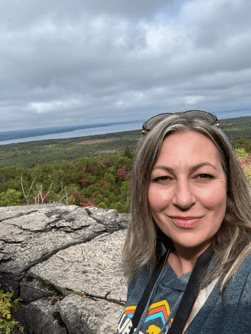
Tucker is the internationally bestselling author of more than 30 books including Ten Tiny Breaths, The Simple Wild, Until It Fades, Say You Still Love Me, Keep Her Safe, and the Fate & Flame series. Her books have been featured in national publications including USA Today, Globe & Mail, Suspense Magazine, Publisher's Weekly, and First for Women. When she's not writing, you can find Tucker reading recipes she'll never make or chasing rabbits away from her hostas at her home outside of Toronto.
We spoke with the author about what her favorite books were growing up, why small towns make great settings for romance, and how people-watching helps in creating her characters.
How did you first get into writing, and have you always been drawn to writing romance?
I was writing stories at six years old and binding them with the help of my elementary school librarian. My favorite books growing up were Anne of Green Gables and Emily of New Moon, and it was the romantic relationships within those stories that I always gravitated toward. So it’s not a surprise romance is woven into my books, regardless of genre.
Readers have described North Country as feeling like "coming home," even though it's a brand new world. What do you think creates that sense of familiarity in your stories?
I think it’s because this story focuses heavily on characters and incorporates my favorite elements: a small town setting, strong family dynamics (and the challenges that come with that), and real-life situations that draw on readers’ emotions.
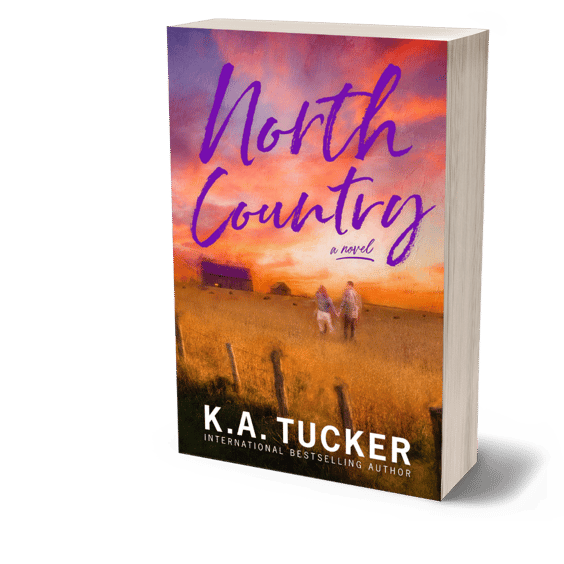
If you love second-chance romance, emotional family drama, and small-town intrigue, North Country is your next great read.
Your settings often feel like characters in their own right. What draws you to creating such immersive places, and how do you go about transforming a backdrop into something that feels integral to the storyline?
I spend a lot of time finding “the right” setting for a story, and while the towns tend to be fictional to allow for full creativity, I draw heavily from real locations. For North Country, I drove 2000 kms in northern Ontario in search of the perfect spot for the Cold River, and it ended up being not where I expected it to be.
I grew up in a small town and, while I couldn’t wait to get out of there as a young adult, there is something comforting and nostalgic about revisiting it. Small towns often have the biggest personalities, and it’s because of the people within them and how they live their lives—which is dictated by their surroundings, be it mountains or ocean, farm fields or deep forest, four seasons or one. Those elements can shape a person, so it only makes sense to paint a vivid picture of the surroundings, so a reader might better understand the characters living in that world.
Many of your characters are shaped by past trauma, but North Country feels like a story about healing as much as heartbreak. Did your perspective on resilience, redemption, and forgiveness evolve while writing this book?
I think life for anyone is all about resilience, redemption, and forgiveness at both a daily micro and life-changing macro level. It’s how anyone survives in this world. It’s how they form friendships and build relationships, and it’s also how those connections deteriorate. I spend a lot of time sitting back and just observing people. I watch how they handle situations and challenges, and the choices they make, and how they rationalize them. I try to understand who they are as people and what makes them do the things they do. This “people watching” helps me immensely when I’m creating characters I can’t relate to who face obstacles that I haven’t faced personally.

This romance also happens between two people who have already lived a lot of life. What interested you about telling a love story where the characters are older and shaped by decades of experience?
For one, so many romance stories focus on youthful coming-of-age love, and there are so many people finding entirely new paths later on in life. Also, a person’s experiences greatly shape who they become. A person in their twenties is going to be a different person in their forties. Some relationships fold while new, unexpected ones form. In the case of Logan and Emery, who both recognized and accepted that they were facing different versions of each other, they still found glimpses of who they used to be together as well as a way forward past a lot of trauma, and I think there’s something very romantic about that.
What themes or tropes do you love exploring in your own writing, and which ones do you gravitate toward as a reader? Any tropes you haven’t explored yet that you’re dying to write next?
My number one favorite trope to read and to write is Enemies to Lovers. When it’s done right (organic vs forced), the tension between the characters pulses with anticipation. Second Chance is a close second for me. I've written a few books where couples reconnect later in life. The Player Next Door has both of these tropes, and it was so much fun to write. I’m pretty sure I’ve written every trope I can think of.
How has being independent changed the kinds of stories you're willing to tell?
I feel like I have more freedom to write without oversight. When you’re writing for a publisher, they are “accepting” your story for publication, which means they can also not accept your story or request heavy revisions. For a publisher, having a marketable book that will appeal to romance readers is critical. As an independent publisher, I also want to write a book that will appeal to as many people as possible (knowing that no book will ever appeal to everyone), but I’m absorbing all the risk and I’m more willing to do that than a traditional publisher might be. The only people I need approval from are my readers.
What would you tell another author who's considering self-publishing through IngramSpark?
It’s a lot of work and there will be hurdles, but you have options that independent publishers didn’t have years ago, and new avenues to access libraries and retailers, especially through online commerce. As a midlist author with a readership in place, it is a viable business option.
Do you have an author or book that was inspirational to you or that you feel has influenced your own writing voice?
I only made the connection recently, but I have to say that growing up reading L.M. Montgomery must have influenced me more than I realized. When I think back to her stories, they are all character-driven and focus heavily on a variety of relationships. Found family, deep friendships, and romance are woven seamlessly into these immersive tales that make a reader feel like they’ve lived another life by the time they’re done. While I’m not comparing my writing to such a great storyteller, I do think I naturally gravitate toward telling stories that strive to feel the same.
What advice do you have for aspiring authors in the indie space?
Focus on the book before anything else. It’s very easy to get swept up in the business side of things—the launch, the social media, events—and I see some people spending so much time, effort, and money on those things when they’re only part of the way through writing their first book (sometimes, they haven’t even started). That side of the publishing business is never-ending and exhausting.
First, write the best story you can write, because no matter how much marketing you do, your craft and ability to write is what will make that reader come back for your next book. Or not.