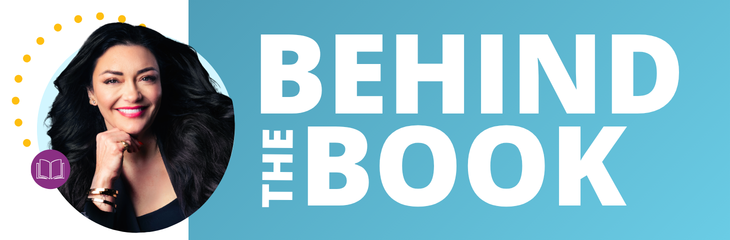
Jane Green was at the forefront of an entirely new genre in women’s literature – “Chick Lit” - writing about real women and real emotions with humor, warmth and honesty. In her first memoir, Rewilding, Green peels back the illusion of having it all to tell a raw, deeply relatable story about losing yourself in adulthood and finding your way home again.
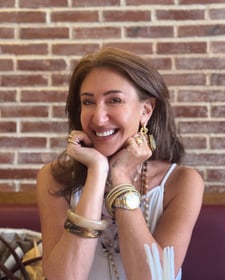
She has gone on to write 22 novels, including 18 New York Times Bestsellers, and is “Dear Jane,” the hugely popular agony aunt in the UK national newspaper the Daily Mail. A storyteller for The Moth, she is now holding writing and rewilding retreats for women – Kitaba – in Marrakech.
We spoke with the author about her beginnings in "chick lit," how menopause can (and should) be the great awakening for so many women, and what success means to her.
You have had a prolific writing career spanning journalism, women’s fiction, and advice columns to name a few. Over the course of your amazing career, what is the biggest lesson you’ve learned as a writer?
There have been so many lessons, but I think I have always stuck with something I learned very early on: you have to write the story you need to tell rather than the story you think will sell. In other words, stay authentic. So many people have suggested I write a psychological thriller, mostly because that particular genre is working really well in publishing right now, but that has never felt right for me. If I did it, it would be because I am hoping for a bestseller, rather than because I was driven to write it. I have no idea what the future holds (and perhaps one day I will be driven to write a psychological thriller!), but I do know that my writing always has to be true to myself.
Tell us about your part in the inception of “chick lit” and what that term means to you today. Do you consider your memoir a part of that genre or not, and why?
I was in my late twenties and had just read Nick Hornby’s High Fidelity, and I was so struck by the fact that no one had done this for women, no one had written about women in their late twenties and early thirties, about being single, juggling dating and careers, in a very real way. So I decided to try my hand. Of course, little did I know that Helen Fielding was a mile down the road doing the same thing with Bridget Jones’s Diary. My first novel sold at auction, and came out a couple of months after Bridget Jones, which was such a huge success, publishers were ready for more. There were a few authors around who also somehow captured the zeitgeist, and a journalist wrote about all of us and said we had created a new genre of fiction, chick lit. At the time it seemed somewhat judgmental, dismissive. A pejorative and a label that none of us loved, but over the years it has become what they call commercial women’s fiction. The label of chick lit dismissed the very real craft that goes into writing a book, any book, and I would argue that nobody has longevity as a writer unless they are talented, whether that’s literary fiction, or, ahem, chick lit.
As to the memoir, no woman in her fifties could possibly claim to have anything to do with chick lit! We left behind the label of “chick” a very long time ago! In sharing my story, of realizing that I had entirely lost myself in constructs I had created in order to feel good enough - wife, mother, author, friend - before realizing I had to once again find the strong, fearless little girl I once was, and perhaps more importantly, learn to finally love her, I understood how many women my age were going through the same thing.
You’ve written across a massive range of work from nonfiction to novels. Do you see a through-line in all of your work?
Even when I was writing fiction, I was always writing about women’s inner worlds, about the things they often think, but rarely say. Of course I was always drawing from my own life, but in writing about that so honestly, it held an emotional resonance with the women who felt the same things. Whilst it’s far more frightening to do that in the form of memoir, without fictitious characters to hide behind, I am hoping that it will impact women in the same way, because of the honesty. Rewilding isn’t going to speak to everyone, but already, there are women who have read it who have related to so much.
What inspired you to write this book Rewilding at this particular time in your life?
As I shared my story, writing about it on Instagram and Facebook, and now of course Substack, I was staggered at how many women reached out to me who were feeling the same things. So many women have lost themselves, or are in marriages where they don’t feel valued or loved. I understood, even before my editor at HarperCollins UK messaged me to suggest I turn this into a memoir, that there are so many women who feel untethered in their fifties, that menopause and children leaving home can leave us feeling lost, and we have no roadmap for how to find happiness and joy again. That’s why I wrote this book, to share my story in the hope that other women may find it helpful.
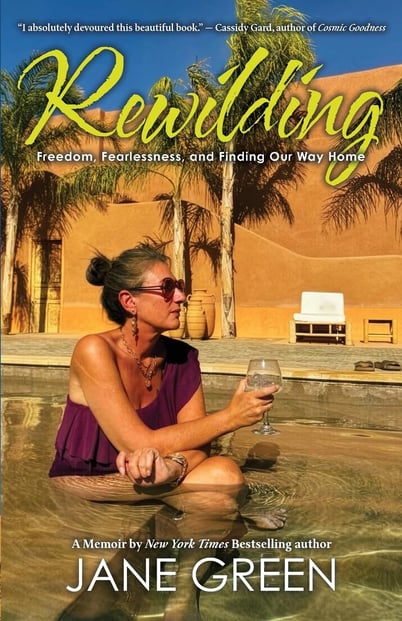
Ready to stop shrinking and start living wild? Check out Jane’s memoir!
Why do you think it’s so difficult for women to center themselves and their own needs in their lives? Are women culturally rewarded for a certain amount of self-erasure in marriage and motherhood?
I think naturally women are often brave, fearless little girls, who hit puberty and start to think they need to change in order to attract boys. And on it continues. We learn to be more palatable, to quiet ourselves and our needs, to fit into a society that doesn’t easily welcome the emotions, the honesty, the messiness that makes up a woman. We want to fit in, to be accepted by our peers, by other mothers, by co-workers, so we decide how to dress, how to behave, how we want to be seen by the world in order to be accepted. So many of us carry a secret shame that we are not good enough, and we will do anything to stop people seeing this terrible thing we secretly know to be true about ourselves: that we are not enough.
We can do this for years and years, play roles, step into personas, but menopause is the great undoing, and if we are lucky, the great awakening. Estrogen disappears, together with our nurturing desires, our willingness to make ourselves smaller in order to fit in. Suddenly we don’t need to fit in, we stop caring so much what others think about us, we stop being willing to put everyone else’s needs before our own. If we are lucky, what can feel like being lost and untethered can be transformed into a midlife awakening, where we rediscover the essence of us, step out of the various constructs and roles, and create a life that speaks to those brave, fearless little girls we once were, a life that is fully authentic.
Did you find anything particularly challenging, surprising, or emotional throughout your creative process to craft this memoir? Was it more difficult or easier to write something so personal?
It was so very much harder! I had absolutely no idea how to do it, and of course, it’s utterly terrifying to write about your own life without the comforting veil of fiction to hide behind. I felt very strongly that I had to be unfailingly honest about everything, that shame had held me back in so many areas of my life, and that the only way to get rid of the shame was to hold all of it up to the light, because of course shame thrives in darkness and secrecy. I am enormously proud of myself, and terrified. I’ve never felt quite so vulnerable in my life.
Do you have a favorite moment of “rewilding” in your own life?
I think perhaps my favorite moments are happening now. Having become a woman who has finally become comfortable with saying no, with setting boundaries, even - gasp - with being disliked, I have found that I have what in many ways what looks like a much smaller life - I say no to social events far more than I say yes, and my friend circle is far smaller than ever before, but ultimately far more fulfilling. Learning the art of discernment and being intentional about every single thing in my life has led to far more peace than I have ever had before.
What do you hope your readers learn, feel, or take away from this memoir?
I’m hoping that it may provide some inspiration, or guidance, for any woman who finds herself in midlife feeling a little lost or untethered, who has lost herself in the various roles of wife, mother, worker, or whatever other constructs she has created in order to live her life, all of which have involved making herself smaller in some way. Mostly I think, it will speak to women who want more, whatever more means to them.
What are you most excited about these days? What are you most looking forward to personally or professionally?
I’ve started to hold retreats in Marrakech, both writing retreats, and rewilding retreats, that feed my soul in a completely new way. There is a particular alchemy when a group of women come together, women who are seeking something, especially in a place as magical as Marrakech. Mostly, the memoir has shown me how much my purpose right now is about helping women find their way, whether that’s through writing, sharing my stories, or leading them on retreats.
When you think about your writing career, what does success mean to you?
For years I equated success with money. I was lucky enough to have had an extraordinary career in what I now think of as the last golden age of publishing. When the money stopped, I felt like an abject failure, like I had no value, even with all the bestsellers and books in print.
Now, success is about being absolutely true to myself, writing the things I feel most strongly about, sharing my journey, showing people how I made the very painful journey from depression and desperation, to a life filled with authenticity and joy.