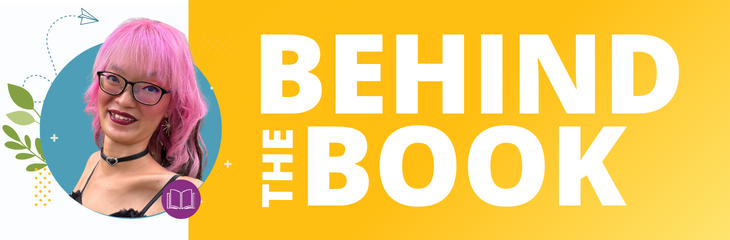
J Brooke’s work is known for exploring gender, family, and the incendiary combination of the two. With I Can Tell You the Version That Will Make You Take My Side, their first book, they deliver candid commentary on a unique gender journey.
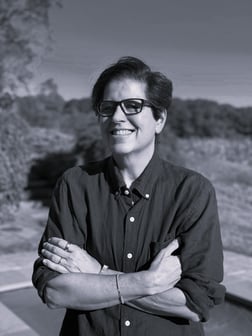
Born intrinsically male, assigned female at birth, and raised in affluent dysfunction in New York City, their gender expression attempted male, cis straight female, and cis gay female before embracing a nonbinary identity. Living without surgical or hormonal interventions, their struggle to find authentic place traverses female anatomy, friendship, suicide, family, testosterone, politics, packers, social media, motherhood, royalty, natural phenomena, cancer, marriage, and the pope. Brooke is Prose Reviews Editor at The Rumpus, and lives in New England with their beautiful spouse Beatrice.
We spoke with the author about their unique gender journey, the challenges of family dynamics, and the power of writing to connect and inspire.
Tell us about your experience working with Driftwood Press and putting out your debut book! What have you loved most about working with an indie press?
Well, I can’t speak for all indie presses - but I was consistently impressed with working with Driftwood. My editor, Sara Moore Wagner, was simultaneously hands on and hands off — as an example, she strongly encouraged me re-working the title and worked with me a lot on that, but also didn’t impose her taste in a number of instances.
It was a comfortable and yet exciting collaboration I’d welcome on any future books.
The publisher, James McNulty, is super knowledgeable about the industry but doesn’t let that make him rigid about ideas. He’s extremely creative and open. I genuinely continue to enjoy the process.
You have some amazing advance praise from people like Rosie O’Donnell, Hannah Gadsby, and Morgan Talty. How does it feel to put out a debut book and be met with such acceptance and celebration?
It feels validating. In each of those cases, for instance, I was struck by their understanding of my book through their unique viewpoints. Those three you mention, they are all very different versions of authors, and none of them poets, and yet they all embraced the writing and the themes. That was astounding on some level. Gadsby, in terms of gender, has a similar journey to mine and a hilarity recounting it, and so I think related to the book. O’Donnell, queer and currently ex-pating in Ireland with their nonbinary child, I think related as a parent through a different lens. Talty, cis and straight, synthesized the work on a granular level, which was deeply moving.
How have you honed your unique voice? What draws you to writing about the intersection of gender and family?
Well, my story is somewhat unique so the voice I write from has ample novel material to work with. For better or worse (and unfortunately more often worse) we all grapple with the complexities of family at various points of our lives. Gender expectations weigh upon even the cisgendered of the world, but for those of us born queer there’s the lifelong white noise in every room and every situation. So these are really aspects to the constant navigation of just walking the planet and breathing in and out that become wildly universal.
How was your experience synthesizing many poems and pieces together to form this book? Did you struggle to decide where each should be within the book’s full arc, or did they naturally fall into place?
I wrote this book daily during the course of a year, so many of the poems are still within the order they were generated. Originally the book had three sections, so categorization and placement were extremely simple. My editor lobbied for two sections which took some re-addressing, but I think that re-working helped propel the story and ground it in the linear fashion it now lives. The arc of the narrator’s life, from three or four years old to current time (which obviously encompasses the anti-so-many-humans politics), ultimately places the poems exactly where a reader would expect them to be.
Is there a particular challenge or freedom to writing in the poetic format vs prose?
Although in my essay work I write what gets categorized as “nonfiction,” I’m often surprised by friends who read my stuff and call me up saying, “I didn’t know that that summer we went sailing on the Hudson River you …” and I always have to remind them it’s art and not my private journal or notes from my therapy sessions. This is where “creative nonfiction” and “auto fiction” are better labels, but still misunderstood. One of the many freeing things about poetry is it’s inherently a more liberating form. In a poem about my mother, there’s no misinterpreting “leaving your hook in, bloody souvenir” as a reveal that when she wasn’t at the opera she was an offshore fisherman.
Do you have a favorite piece in the collection, or one that was most interesting or rewarding to write?
I'm going to say the last poem of the collection (spoiler alert: it has a happy ending). I wrote it about Beatrice, my spouse of 20 years. It expresses the cocoon of our current relationship, the well of which doesn’t mask my eternal conflict but does hold soft space where it can live in honesty and peace.
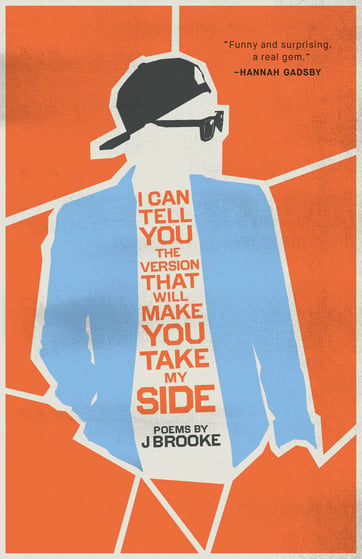
Check out J Brooke’s striking and inspiring poetry debut!
What do you want people to think about or feel as they read this collection?
It's funny, the initial feedback I get keeps calling the work (albeit funny) “brave” and that I in turn am “brave.” But really I want that reflected back. I want readers to realize how much bravery they exhibit every damn day they awake and embark again.
You said in a letter to the reader, “So really, I wrote this book for you. Whether you listen to Chappell Roan and are fluent in packers and T or listen to Dave Chappelle and think of a binder as something with three rings and lined paper.” Why was it important to you to make sure this book was accessible to all audiences?
Because I don’t think this division and hatred in our country is natural or forever. The more people who find things within each other to relate to, ESPECIALLY folk who think they have little or nothing in common, the better for the healing which I hope comes next.
Over the course of your writing education and career, what is the biggest lesson you’ve learned?
I think the biggest thing that freed me to write was realizing I could put blinders on when telling a story. Early on, I was overwhelmed by how much noise swirled around in a given event, and that made storytelling difficult to rein in to accomplish a comfortable level of clarity. For instance, in this book each poem has a tunnel vision of sorts. A poem set at summer camp ignores everything happening simultaneously to that reality. For the duration of the poem there is only the narrator and their tormentors. When I finally learned to let one aspect of a story have the spotlight, like it does in that poem “Gigantor,” my process found its freedom and groove.
Tell us about your experience as an editor with The Rumpus. What do you love about that work, and how has it changed how you approach your own writing?
I was a longtime reader, fan, and contributor to The Rumpus before joining their editorial team a few years back. The peer group is unparalleled there — everyone I’ve encountered past and present is excellent and has a loving commitment to respecting writing, writers, and readers. It genuinely feels egoless and that, I believe, uplifts the job of publishing content with integrity. For the last year plus, Roxane Gay and her wife Debbie Millman have owned and operated the pub, and that has been an opportunity to work closely with the zeitgeist’s most original and prolific voice, which continues to be an opportunity very few people are fortunate enough to stumble into. In terms of how this changes my writing, how can it not?
Great writing involves great editing, constantly honing my editing skills is a de facto honing of the same skills I use to create my own work.
How are you celebrating Pride month? Any traditions?
Years before I committed to this form of writing people would ask me, as June approached, what I was doing to celebrate Pride month. I would often flippantly respond along the lines of “I’m throwing a party, hiring a magician, and inflating a ton of balloons” because my son was a baby and his birthday fell on or around the Pride Celebration in NYC, where we lived at the time. But looking back, I realize I wasn’t being flippant as much as living my queer out truth to the best of my abilities amidst what may not have always been the most naturally welcoming era to be a queer single parent. My son is long grown (if he has balloons this birthday he won’t be requiring my inflation skills), and my spouse and I, for years, have attended various Pride events wherever we are living or (sometimes) traveling. But I think the larger contribution I make to visibility remains living an out honest existence. Yes, cheering a parade or making a sign is helpful in combatting erasure. I’m hoping putting myself, via my words, out into the world helps even more. My old friend Micheal Braverman always said, “Once an accident, twice a tradition.” So with that in mind, a book launch during Pride each year would be a mighty and aspirational tradition!