Daniel de Llano is a Spanish author, coach, and hypnotherapist specialized in narcissistic abuse and emotional manipulation recovery. His debut book, The Sparkle Trap: Recognizing, Escaping, and Healing from Narcissistic Abuse in LGBTQ+ Love, was named the Overall Nonfiction First Prize winner at the 2026 IndieReader Discovery Awards, selected from over 1,000 submissions across all genres.
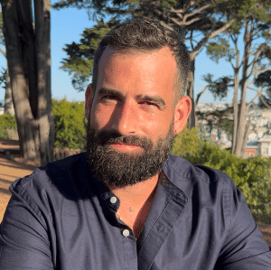 Born and raised in southern Spain, de Llano developed his expertise through years of research and professional training in the United States, working directly with survivors across the LGBTQ+ community and beyond. He is the founder of IPSAR—the Association for Research, Prevention and Recovery from Relational Abuse—and a speaker at the First International Congress on Narcissistic Abuse in Spanish.
We spoke with the author about using hypnosis to boost confidence, shining a light on abuse within the LGBTQ+ community, and how a disco ball inspired his debut.
How did you first get into hypnotherapy and your work in abuse and emotional manipulation recovery? What then drove you to write about these topics?
I felt attracted to hypnosis since I was a teenager. I loved studying the mind, spirituality… I know, I was a little weirdo. But I loved it!
Then, somewhere in my 20s, I got trapped in an abusive gay relationship. Even when, years later, I got the resources to understand and the support I needed, I kept feeling bonded. My therapist told me about using hypnosis, and the whole game started to change. It felt so powerful that I wanted to study it, this time for real. Even though I deeply understand trauma bond, I do not use hypnosis to work on it but to boost confidence, clarity, and to activate a vision of future, which is really powerful too.
I published a theater play in Spanish back in 2015, when I really wasn't understanding a thing. It talked about how love erodes your soul, and we are still there. That was just a decompression of pain. Now I write understanding that pain and knowing some more things we can do with it. Not only writing theater plays!
What inspired you to create this book, and how did you know you were the right person to bring it to life?
When I thought about creating it, I didn't think of myself as 'the right person,' honestly. I was just broken in a living room full of moving boxes and suitcases in San Francisco. But I didn't want to write a memoir of how my life got destroyed in the name of an impossible love. I wanted to transform my pain into a resource of support that could save others from what I went through. I knew that the decision of writing this book would include a lot of research and training. I wanted to become the 'right person' for my community. Ultimately, I didn't see anybody else talking about this, so… someone had to do it!
Years later, and with all the things in place from those moving boxes, I had the pieces together and the courage to publish.
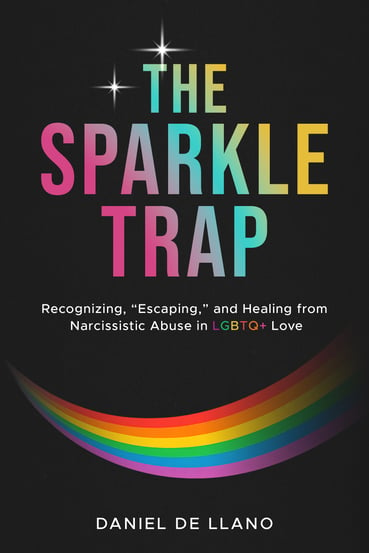
Ready to reclaim your sparkle?
Check out Daniel’s guide to healing The Sparkle Trap.
You've described The Sparkle Trap as "not a traditional self-help book." What aspects of traditional self-help did you want to move beyond, and how did you come up with the additional resources and tools to add to the book?
There is pain, there is fuel, there is compassion, there is theory, but also there is a curated selection of exercises at the end of each chapter, QR codes with videos with me, access to a community… all of it is included in the book.
I know that someone who finds my book might not be a frequent reader, but someone needing support. We all learn differently, and I wanted to provide different angles and formats in the same book. Reading, writing, videos…
As this book is part-memoir, how did you decide what parts of your own story belonged in the book and what parts needed to remain private?
'My story' is actually a combination of stories of different survivors — including me — dealing with different narcissists, and there are many changes to those stories and real examples to preserve the identity of all parties.
I also had it clear that I don't want or need any kind of revenge, and I don't want to expose anybody. I also didn't want a wave of cold theory after my research and training. But something balanced.
I want my readers to find the friend that I never had. Not the one who tells you 'just take your things and go' and gets frustrated if you don't — and I also understand those. I want them to find that friend who has gone through it, specialized in it, and takes your hand while walking with you. That's the angle.
But in this case, that friend is a Spaniard. Have you ever had a Spanish friend? It can be very 'special'…!
What feedback from readers has surprised or moved you the most since releasing this book?
Many people have read it — ARC readers, friends, the jury of the IRDA — but the book is still finding its way to victims and survivors. I have received great feedback, but I recently talked to a therapist who shared with me that he's using it in his practice with some clients, with great results. Recently, one of his clients got it and it helped him a lot. It filled my heart… I'll love when that happens more and more, when I receive more and more messages from people who are free now. That's my goal and dream.
How did you settle on the title for this book, and what does "sparkle" represent to you?
An abusive relationship often feels like a trap. That is how it works — something to attract you, and then it's hard to find the way out. These types of relationships start with the person mimicking your entire self, burying you in glitter… and then the 'real dance' begins, once they have created some kind of dependency.
When I was thinking about the title, the first draft of the manuscript was almost finished. I kept thinking about the glitter and the trap.
I love to put a little disco ball on the window, so when the sun hits it the room fills with sparks. So I imagined a mouse trap with a disco ball instead of cheese. I know, the process might not sound really poetic, but it is what it is! I thought: how can I put the trap and the disco ball in the title? I looked up and saw the sparks on the ceiling, and voilà: The Sparkle Trap.
When survivors finish reading this book, what do you hope stays with them?
I want them to get their spark back. To find it even in the middle of the chaos, and to start using it again, boosting it. Breaking free from abuse. Finding a friend, real support… I want to make them feel 'the other side of The Sparkle Trap,’ so that they see it's possible, so that they want it. So that they get there.
Pride Month is a time to celebrate stories of queer visibility, joy, and progress. Why do you think conversations about unhealthy relationships and emotional abuse in the LGBTQ+ community also belong within Pride?
As you say, it is a time to celebrate stories, but also to reclaim our space and fight for our rights, to give visibility to unspoken realities. And one of the most unspoken realities in our community is this: There is abuse in our community. And sometimes we also stay silent about it. Sometimes because we fought so hard to be seen as a community that admitting internal harm feels like a betrayal.
Pride, for me, is also about that honesty. About saying: our relationships deserve the same scrutiny, the same protection, the same resources as anyone else's.
Narcissistic abuse doesn't skip us because we're queer. And survivors in our community deserve to be believed and supported, never silenced.
June is a month full of cultural events that facilitate visibility, and I feel proud of everything we have built. But I also think the next step is taking care of each other more, from the inside.
Your background includes performing arts training. Has storytelling as a performer influenced how you communicate as an author?
Yes, I studied at the Royal Higher College of Performing Arts (RESAD — Madrid), many years ago. This question makes me look back… uh… It's incredible how much a life can change!
It took me long years to realize that, especially, some types of narcissists are 'Oscar-winning' actors. Once I understood what I was really going through, reactivating the performer in me — combined with all the resources I was gathering back in the day — helped me really strategize in order to leave safely and without losing myself again.
Through my own experience, and also working with survivors afterwards, I understood that plain theory is not always enough to make somebody gain the necessary strength and courage to leave an abusive relationship. Breakthroughs, impact… that is what can really move the needle quickly. Combining storytelling, scriptwriting elements, neuroscience and practical exercises, all wrapped with some Spanish flair. Having studied storytelling and delivered powerful stories on stage helped me craft this book.
What has been the most meaningful part of the indie publishing process for you?
A lake, a chair and a laptop. A mountain, a chair and a laptop.
I remember thinking: I'm originally from a little town in the south of Spain and now I'm here, in such beautiful places in the US, putting together years of notes, letting everything come together finally, with full control and following my own instincts… That was joy.
The entire writing process was really intimate, deep, personal and hard at times. Like a beautiful, sweet and sour experience I will never forget.
When I finished the manuscript, I came back to Spain after about five years living there. I really felt like leaving behind a part of me. A pretty long, but wholehearted thank you note.
When you think about your writing career, what does success look like to you?
If someone suffering types 'abuse LGBTQ+' and my book shows up, that is success. An email saying, 'Daniel, I did it,’ that is success.
Also, I wrote a second book in English called Interconnected: Sex, Dopamine, and Us — An Experimental, Gay, Short Nonfiction Book. It's a short but impactful read that could help many people understand dynamics around dating apps, chemsex, and hook-up culture, in combination with dopamine addiction. It can be controversial. That's the point—a short book that could generate conversations and bring new ingredients. If those conversations start happening, that is success.
From the Book:
“One day, I picked up my self-love from the floor, and the scattered pieces of myself, and I said:
I don’t even care if my things end up on fire in Dolores Park... I’m now ready to leave.
With that huge wave of strength, rage, and (for the first time) truly prioritizing myself, I left.
I hope this book takes you to that moment... the one where you finally understand that you should be Number One on your own VIP list, and from there, onto a path of growth and healing that finally brings you peace.
Welcome to the other side of The Sparkle Trap.”