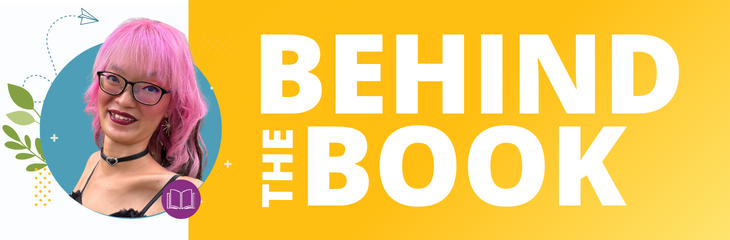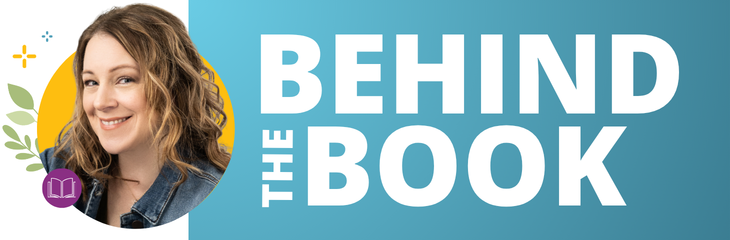
M.J. Etkind lives a double life. By day, she's a corporate girly with a business degree. By night, she writes romance novels in a cozy, book-filled apartment in Boston. Her newest release, The Lone Wolf Paradox, is a cozy paranormal romance about two independent werewolves who discover that healing, family, and love may require building a pack instead of going it alone.
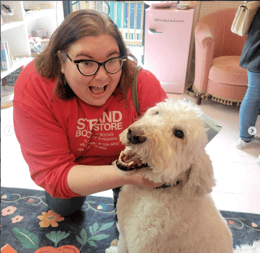
M.J. Etkind’s most favorite fun fact is that she once took an entire vacation to visit a bookstore. Etkind has previously published two romance novels. Dishwasher Safe (2024) and The Witch of Wall Street (2025) which was featured in The New York Times Book Review.
We chatted with the author about why diversity in her characters is so important to her, what advice she'd give to other indie authors, and when she feels most inspired.
How did you first get into writing, and what drew you to the romance space?
I've been writing for so long, and I think it started with fanfiction and obsession. Characters and plots have always crawled into my head, so writing has always been a way to sort of release the pressure. It's also just a lot of fun.
I got into romance because I was reading a lot of romance, and it was popular, and I liked the structure, the Happy Ending of it all. I liked that it’s all about the journey and the emotion and really nailing that versus the destination.
I also like that romance is sort of the ultimate rebellion against the patriarchy. It's written for women, often by women, and it's often the only genre that subverts who gets to be happy.
For Women, Queer people, Disabled People, and People of Color who are almost always sentenced to unhappy endings in the name of literature, romance promises an HEA.
You recently did a book signing with IngramSpark at BookCon in New York City! How was your experience getting to connect with so many readers about this book?
It was amazing, and I was so grateful for the opportunity. I'm still a really, really small author all things considered, and it was one of these moments where I got to live out my dream and pretend to be a much larger, more popular author. It's amazing to get to be included in such a great lineup for authors and books.
What themes or tropes do you love exploring in your own writing, and which ones do you gravitate toward as a reader?
All of my books have some sort of forced proximity, like my characters are not going to be together organically. I also try to play with gender. In The Lone Wolf Paradox, Bea is a business owner and landlord. In all of my books women often hold positions of societal power over men. They either make more or own more. I like playing with that power dynamic.
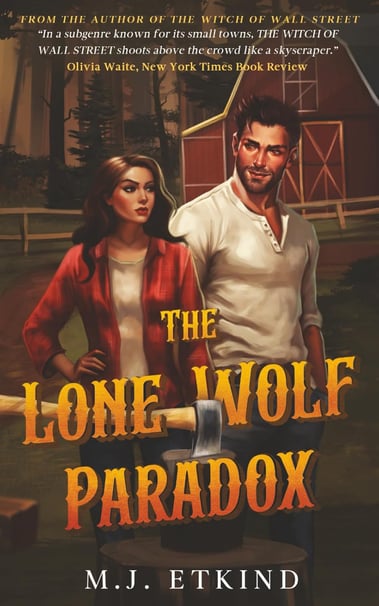
Check out your next cozy paranormal small-town romance obsession!
What draws you to writing small-town romance, and why do you think this subgenre is resonating with audiences so strongly right now?
The Lone Wolf Paradox is actually my first small-town romance, and in a lot of ways this was a response to Hallmark small towns. Bea was already independently in her town, and her joinery wasn’t giving up a prestigious big city job for a man. A lot of the book was her learning how to succeed at her business and learn how she can be independent without being lonely.
Talk to us about the importance of representation and inclusivity in your work. What does it mean to you to have diversity amongst your characters?
I want to write in the world I live in, which means I have to write diverse characters. I think I always prioritize people first, so yes, my characters are diverse and ultimately their backgrounds are going to inform decisions and characters, but also they're people first and I think that's the best way to consider a well-rounded cast.
How has self-publishing and being an indie author affected your writing career and ability to tell stories you might not have been able to otherwise?
This is my entire writing career. When I first considered publishing, I knew I wanted to get a book out rather than languish in the query trenches. I think there are really good ways to self-publish now, especially if you're able to pay for editors and cover art out of pocket.
I think the reality is that traditional publishing is just exceedingly hard to achieve, and it has never been a meritocracy, less now than ever.
Large publishers are getting more conservative (both politically and financially), and they're looking for very sure bets. This all makes attempting nearly impossible.
What advice do you have for other indie authors, particularly about marketing to bookstores?
How much time do we have? If you find me on social media, I have an entire resource that walks indie authors through bookstore marketing, but my biggest piece of advice is to make your book competitive with trad publishers. Price your book like others in your genre, offer the standard discount, offer returns and ultimately produce a professional product that bookstores can sell next to your trad counterparts. There is no indie author curve for bookstore marketing, if anything indie authors have a much harder bar to reach as even the more welcoming bookstore to self-publishing still carries mostly traditionally published books. The economics have to work for bookstores, and that means actively following traditional publishing with their terms as big publishers are setting the industry standard on what a book should be. Indie authors just don’t have the notoriety and the power to change the narrative, at least not yet. Doing what a trad publisher does but backwards and in heels is our best bet on bookstore placement.
The other thing is you have to actively market to bookstores. This means emailing and submitting to bookstores via forms. It’s a lot of work, but it is an important part of getting out from algorithms.
When do you feel most inspired?
I am most inspired at the beach, which I know is hyper-specific, but there is something about taking a walk on the beach that just makes me want to write. I think it might be the quiet and change of scenery. I don’t get to the beach much, but when I do, I am inspired.
If you were to genre-hop, what other genres would you like to explore writing?
Dystopian. I spent a lot of my 20s with a quasi-dystopian that takes place in our current world. I haven’t read dystopian in a while, but I came up with it when I was a kid, and it is still one of my favorites.