

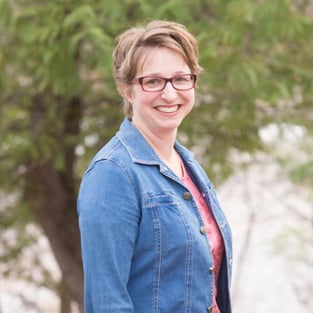
Naomi Rawlings is the USA Today-bestselling author of more than 20 historical Christian novels, each of which takes readers back to a time when neighbors knew each other's names. She writes with a combination of heartfelt romance, spiritual depth, and vivid historical detail.
Rawlings' Texas Promise series is about finding home and family in the Texas frontier through marriage-of-convenience romances, dangerous secrets, and hard-won second chances. Her Dawn of Alaska series is a frontier family saga about courageous men and women building lives in the Alaskan wilderness while facing harsh conditions, personal loss, and unexpected romance.
She lives with her husband and three children in Michigan's Upper Peninsula where they get 200 inches of snow every year, and where people still grow their own vegetables and cut down their own firewood, just like in her books.
We spoke with the author about why she loves Dr. Quinn, Medicine Woman so much, her go-to tropes, and the most valuable lesson she's learned as an author.
You’ve written historical fiction across very different environments from the Alaskan frontier to Texan ranch towns. What's your research process like, and how do you approach building realistic historical settings?
I go to where I’m writing about. I just got back from a research trip to the Texas/Oklahoma border, which is where I’ll be setting my fourth series, the first book of which will release in December. I've found that the best way to bring the historical elements of my books to life is to visit obscure little county museums and historical societies. They always have the most interesting stories about a natural disaster or unsolved murder or frontier life that I can then shape my books around.
Also, I order super boring, obscure books that no one has ever heard of and read the parts that I feel like are relevant for my novels. For my Alaska series, I read Alaska and the U.S. Revenue Cutter Service, 1867-1915. I got my ideas for both the seal poaching novel and my woman doctor novel from that book. For my Texas Promise Series, I read up on the history of the Texas Rangers and the cross-border cattle rustling that took place after the Civil War, which resulted in the Texas Rangers being formed. And for the new ranching series that I’m starting, I have several very boring books about the beginning of the stockyards in Fort Worth and Native American/rancher relations in the late 1800s.
What appeals to you about writing connected family sagas rather than standalone novels? Why is a large, unconventional family dynamic compelling?
It’s so fun! The messier the novel, the better. I mean, why bring a regular Ranger in to help with the cattle rustlers when you can bring in a former friend who you blame for your father being paralyzed? That kind of built-in tension is what I love.
Sometimes I use a literal family, like with my Dawn of Alaska books. And sometimes I use what’s called found family, which is a group of close friends that act like a family. That’s what I did for my Texas Promise Series, which starts with a pact that five boys make about getting married when they’re 12-13. Fifteen years later, they’re no longer very close, but they’re forced to work together to protect their town, and in the process, they each find love. Having multiple layers of emotional tension makes the stories really compelling.
Your novels consistently explore faith during hardship. What draws you to that tension between struggle and belief?
I feel like that tension between struggle and belief is where faith becomes real. It’s easy to write about belief when life is going well. But I’m much more interested in what happens when everything falls apart. Then the question isn’t what do you believe, but do you believe it even when things seem impossible? As a writer, one of the most important moments in my books is when my main character’s control is stripped away, because that’s the moment when faith stops being theoretical and becomes a choice.
I don’t write stories where hardship disappears. I write stories where God meets people in the middle of their darkest moments.
What are the key elements to crafting a great romance novel? Do you have any absolute favorite love stories across books, film, or TV?
Chemistry between the two main characters. If you don’t have that, then it doesn’t matter how good your plot is or how many layers your characters have. No one wants to read a romance novel where the FMC (female main character) and MMC (male main character) are flat when they’re on the page together.
After that, I try to put in a strong plot where there’s more at stake than just the two main characters falling in love. And as we’ve talked about, I like to add a lot of layers—or what some authors call interpersonal conflict—to my characters to make them deeper and feel more like real, living breathing people.
One of my favorite TV series of all time is Dr. Quinn, Medicine Woman! I love how Sully is so wrong for Michaela, but also so right. I love how Michaela is always trying to do something that goes beyond her own desires, like take in orphans or help the Cheyenne or lobby for the immigrants being mistreated in the mines.
Do you have a go-to trope, or one you’re interested in exploring?
I really do like marriage of convenience, or any other type of forced proximity. Especially in no-spice or Christian romance. One of the struggles no-spice authors face is having enough romantic tension between the main characters when there's no physical element to the romance. Forced proximity, where the characters have to be together and keep stumbling awkwardly around each other is a great way to force more romantic tension into the novel.
Another trope I love is the billionaire/free spirit combination. Since I write historical, my characters are millionaires, not billionaires, but it’s the same dynamic. I love when a straight-laced, my-way-only businessman has his life turned completely upside down by a fun-loving, free spirit.
What’s your favorite genre to read?
Romance is always, always, always my favorite. I will read other genres, but romance is the only genre where I can really lose myself and read for fun. These days I find myself personally reading more and more rom-com. I think because I write the heavy, historical books that are research-intense, I really like reading contemporaries that make me laugh but still have all the same romance dynamics.
Your Texas Promise series features tropes like marriage of convenience, small town community, and found family. What do you love about storytelling with these tropes?
I love that these tropes force people into relationships before they’re ready. Marriage of convenience especially strips away the illusion of control. Two people are bound together whether they feel ready or not, and they have to figure out trust, sacrifice, and love. There’s no slow buildup. There’s immediate awkwardness due to the characters always being together in a situation where they’d both prefer to have much, much more space.
The small-town and found family dynamics play on the same sort of tension, just without romance. With a small town or family, you have characters who show up at awkward times and remember things the main character wishes they’d forgotten. At the same time, these small town and found family characters can also be some of the most loyal and trustworthy people in the novel. Both tropes are other layers of tension based on forced proximity. It just plays out differently on the page.
And they help keep the novel messy. And as I already said, the messier the novel, the better.
Your Dawn of Alaska series features a harsher environment, wounded heroes, and emotional healing. Why do you think these themes resonate so strongly with modern audiences?
I think these themes resonate because people see themselves in those wounds. Even though my stories are set in the 1800s, the struggles aren’t that different from what people face today: loss, fear, burnout, broken relationships, the feeling of carrying more than you can handle.
My Alaska setting just strips everything down so that there’s no comfort or safety net or aspect of daily living that’s easy and convenient. This forces my characters to face what’s really going on inside them, and it resonates with readers today because people are looking for hope that feels honest. They want to see characters who struggle but still find healing.
Check out Naomi’s historical series for unforgettable stories of faith, resilience, and romance!
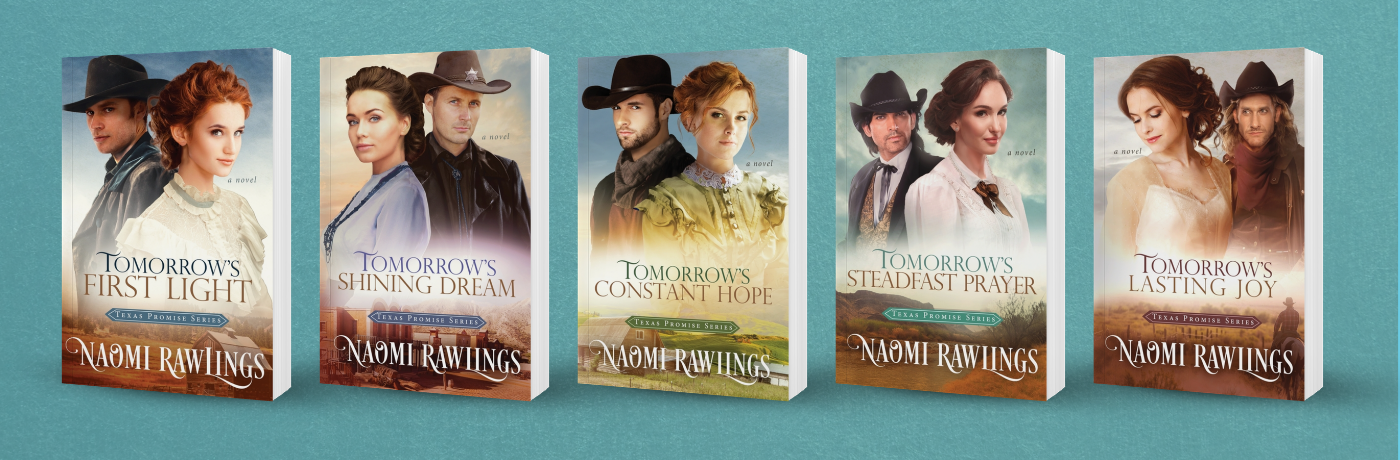
The Texas Promise Series
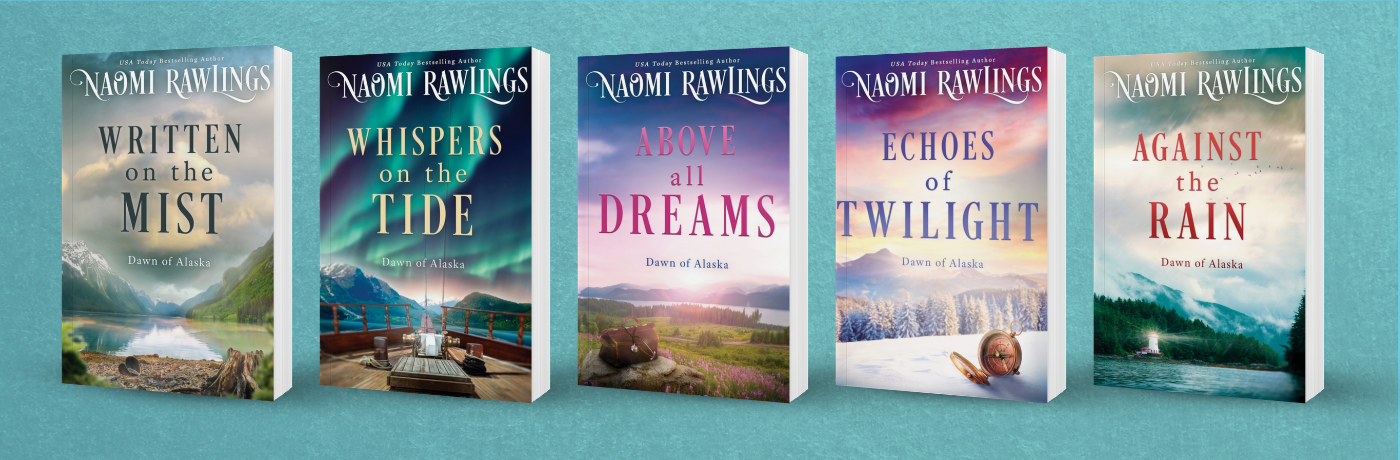
The Dawn of Alaska Series
Whispers on the Tide
Having experienced both traditional and indie publishing, what makes the independent side of your work stand out as particularly meaningful?
Being able to foster relationships with my readers. I am so much closer to them as an indie author. I can email them and do online parties with them and post pictures of my writing in my Facebook group.
Over the course of your career, what’s the most valuable lesson you’ve learned as an author?
To listen to my readers. They read a lot of authors, which is wonderful, but I want to provide unique books that are a little different and go a bit deeper than the average reading experience. They’re the reason I set my most recent series in Alaska. I was having an online chat with them, and I said I was tossing around the idea of sending one of the marshals from my Texas series to Alaska. You should have seen the looks on their faces. They were ecstatic, and that was how I knew I could pull off a series set in Alaska, even though there are not very many historical romance novels being set there.
Tell us about your work with other writers as a mentor. What advice do you have for aspiring authors on creating a career in writing or marketing their titles?
I enjoy giving back to the author community so much. The reason my career has gone so far is because people have helped me along the way.
At the beginning it was with writing craft, then it was with marketing support, and today it’s by sharing new things and experiments they try. No one author can do all the things and explore all the possibilities. But I can try a handful of new things and share the results with authors who are trying other things, and that’s extremely helpful when it comes to navigating an industry that has seen major changes over the past fifteen years.
My biggest piece of advice to aspiring authors is to write every day. Writing is a skill, like learning to play the piano or play basketball. In order to get better at taking the thoughts in your head and putting them on the page, you need to practice every day.
My second piece of advice is to study. Study your favorite authors in the genre where you’re writing and figure out why they're your favorite and what makes their writing stand out. Then ask yourself how you can incorporate those same things into your books.