P. Anastasia is the award-winning author of 19 works (with more on the way), including novels, novellas, and enchanting children’s picture books. Known for her signature blend of mystery, charm, and a touch of magic, her storytelling captivates readers across genres and ages.
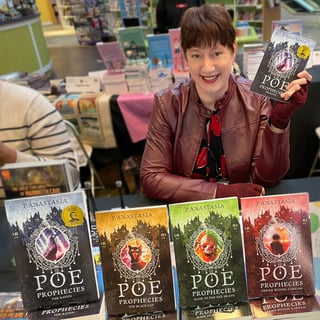
Drawing inspiration from the dark, fantastical worlds of gothic literature, POE Prophecies is her newest award-winning middle-grade series, featuring mysterious urban fantasy that weaves Edgar Allan Poe’s real-life history and classic works into a fun, original adventure. She has also lent her voice professionally to radio, television, and audiobooks.
We spoke with the author about what drew her to Edgar Allan Poe as inspiration, the key to writing authentically for younger readers, and what she finds most rewarding about being an indie author.
How did your journey into writing begin, and what do you find most rewarding about being an independent author?
When I was little, my parents read to me every night, introducing me to everything from Native American myths to Aesop’s fables. I’ve loved storytelling for as long as I can remember, and I had an extensive collection of Little Golden Books and a variety of books on tape. The public library was also an essential stop on my way home from school. I attempted my first novel at around the age of eleven, wrote for two campus newspapers during my college years, and decided to never put down my pen.
The most meaningful thing to me about being indie is getting to connect with readers on a deeper level through social media and email.
Some have been reading my books for over a decade, and I am grateful that my stories resonate with them and keep them coming back for more.
What first inspired you to start the POE Prophecies series? And what drew you to Edgar Allan Poe over another literary figure as the foundation?
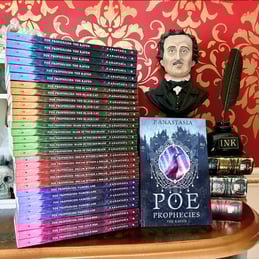 I fell in love with Poe’s works when I was a child, and I always suspected there were other kids out there who might feel that same spark if given the proper introduction to his work. This series was inspired in part by that, and by my desire to create something I would have devoured at a young age, while building a world even adult readers can enjoy.
If readers already love Poe, I hope the books deepen their curiosity; if they don’t yet, maybe the stories will encourage them to try his work for the first time. This series also sets out to dispel a lot of the misinformation surrounding the complex author and his tragic life. It is my hope that readers come away with a better understanding of Poe that corrects some of the popular misunderstandings about his character.
A major inspiration was The Narrative of Arthur Gordon Pym of Nantucket and the eerie way parts of that story mirrored a real event decades later. The theory that Poe’s writing might be hiding even more premonitions and secrets became the heart of the series.
With the series running since 2023, how do you strike a balance between consistency in the world you’ve built and introducing new, compelling ideas?
Since the beginning, I knew where the story would end, but getting there takes time. The first step in each book typically involves reading some of Poe’s works and researching a particular part of his life. I don’t always know exactly where the plot is going until I dive into each installment and let it unfold. People often ask me “how” I write a book, and my answer is always: I write down what my characters do. While I have some idea where the overall arc is headed, my characters often surprise me. Some writers are plotters; I’m more of an observer.
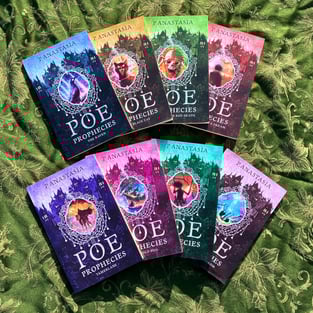
Dark secrets, hidden clues, and magical forces await!
Dive into POE Prophecies and uncover what lies beneath the pages...
How has your experience been adapting somewhat darker themes from Poe into works for a middle-grade audience?
Because I’ve been reading Poe’s works since I was a kid, I haven’t found too much need to alter the way I approach them in my story. My intention is to keep things from getting too grotesque. While POE Prophecies will, and does, deal with dark themes, I try to pull back on some of the more gruesome details when possible without making the scene feel hollow. Many kids can handle more mature themes than we give them credit for.
What is the key to writing characters and dialogue that feel authentic and appropriate to younger readers without oversimplifying them?
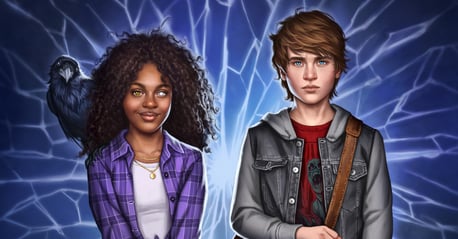
Treat kids with kindness and respect. They are often much smarter and more capable than you think, and they thrive on reading stories about characters older and more mentally or physically mature than themselves. They want to see themselves in the protagonists in a way that feels natural. Although a certain level of discretion is required when writing for them, children don’t want to be treated like children. I write my young characters with some inherent wisdom and maturity, while keeping in mind that they are curious and experiencing much of the world for the first time.
Your work often revolves around loyalty, perseverance, and friendship. What draws you to those themes, and why are they important to represent in a kid’s series in particular?
Loyalty, perseverance, and friendship are actually strong themes in all my novels. For kids in particular, this includes early relationships and learning who to trust, how to keep going when things get difficult, and what it means to stand by someone through tough times. I’m drawn to those themes because they’re both timeless and deeply personal. No matter the setting or adventure, these emotional threads make a story stick and help readers connect with the characters.
In a children’s series, especially, it’s important to show that challenges aren’t faced alone, and that strength doesn’t always look like bravery in the traditional sense. Sometimes it’s choosing to keep trying, or being there for a friend when it matters most. Those are the kinds of messages that can quietly stay with a reader long after they’ve finished a book.
If readers take away one philosophical idea from this series, what would you want it to be?
Look beneath the surface of one’s words and actions, and you may find something unexpected. It goes back to the old adage: “Before you judge a man, walk a mile in his shoes.” The same can be said about the motivations of many of my characters and those we meet in the real world.
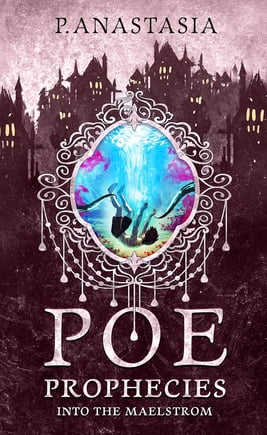
The 8th installment is coming out in May. What can you tease about POE Prophecies: Into the Maelstrom?
This is one of my favorites of the series for a special reason I can’t divulge just yet. It was so much fun to write, though! The story in book 8 takes place over the lightning-fast span of only about 16 hours of the characters’ lives. A lot is at stake, and things move fast, to say the least. Don’t let the length of the book fool you. You may think that not a lot can happen over those 16 hours, but everything will change.
What’s the best advice you’ve gotten from a fellow writer?
Write on the good days. Write on the bad days. Sometimes it’s a paragraph. Sometimes it’s a chapter. Make a point to show up, and your book will get done. Passion and perseverance are essential to anything worth doing.
And if you could give aspiring indie authors a piece of advice on creating something special and meaningful, what would it be?
Write what you’re called to write, and then you’ll find your readers. You don’t have to take everyone’s advice on what your story should be or what the market is looking for at that exact moment. Chasing trends is an express lane to losing your creative spark.
When it comes time to polish the manuscript, make sure you find an editor who understands your vision and personal goals. Not every editor is a good fit for every writer, and it’s okay to shop around. Collaborating with your editor is almost as important as writing the book! When your relationship clicks, they can help make your work shine.
What is your favorite genre to read? Are you drawn to material similar to your own work or something totally different?
Nonfiction, surprisingly. I love learning about medicine, biology, psychology, and human behavior. All things science-related!
What book or author changed your life or inspired your own writing style?
Katherine Applegate was my biggest inspiration as a kid, and she continues to inspire me today. Her middle-grade series, Animorphs, helped me foster a love of reading, and I often see the effect of her influence in my own books. I loved how her characters felt real, and the dangers they faced were larger than life. That series dealt with dark, heavy topics such as war and loss in a way that made it accessible to young minds and stuck with me ever since.
What other genres would you be excited to experiment with in your writing?
I’ve written in several genres already, including some romance, epic fantasy, speculative fiction, psychological horror, sci-fi, mythology, poetry, children’s picture books, and urban fantasy. If I could dive into a genre I haven’t fully explored (but love), it would be creature horror. My passion for science and biology has made me a fan of creature features. I love how creative and visceral some monster designs have become throughout the years, and I am always excited to see what Hollywood cooks up.