
Deric Augustine is an actor, writer, and producer originally from New Orleans, Louisiana. His debut novel, Nawlins, is a YA coming-of-age fantasy about a teenager discovering her hidden magical powers at a secret wizarding school in New Orleans.
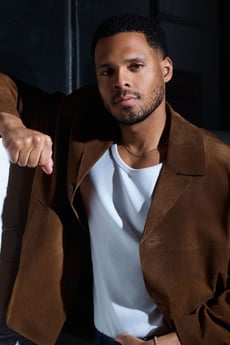
As a teenager, Deric Augustine began performing in theater, later earning a Theatre and Drama degree from the University of New Orleans. After graduating, he moved to New York City to continue his training at the Negro Ensemble Company and William Esper Studio. Augustine has worked on projects such as All American, Cloak and Dagger, Swagger, Criminal Minds, Vampire Diaries, Shameless, Queen Sugar, Godfather of Harlem, on which he plays Muhammad Ali, and many other notable TV and film projects.
We spoke with the author about how a local landmark inspired his debut, the ways in which his acting background influences his writing, and honoring his mother's legacy.
As a debut author, what has been the most special part of your indie publishing journey?
It took me seven years to write Nawlins, and the most special and exciting part of my indie publishing journey has been sitting back and realizing that I actually did it. I WROTE A BOOK. That feeling is still surreal. I remember mapping out the characters, the plot, the world, and the story itself and thinking, WOW, this is going to take forever. And honestly, it did. But now, years later, it’s finally published and in readers’ hands.
A few years ago, I took a fiction writing class at the Beyond Baroque Literary/Arts Center in Santa Monica, and the instructor always said there are two kinds of authors in the world: the ones who say they’re going to write a book, and the ones who actually write and publish it. Being able to say I crossed that finish line, to turn an idea into a completed novel, has been incredibly rewarding.
What inspired you to write Nawlins, and what was your creative process like from the spark of the idea to its final release?
YA fantasy was my favorite genre growing up. I loved escaping into those worlds, but I often wished I saw more characters who looked like me, and not just in appearance, but in culture. I wanted to see my food, my music, my accents, my family dynamics, and the everyday conversations that make being a minority in this country so rich and diverse reflected in those stories. I remember thinking, one day, I’m going to write something that captures all of that.
The idea for Nawlins really came to life while I was in college at the University of New Orleans. For a creative writing assignment in a literature class, we were asked to visit a local landmark and write a piece of fiction inspired by the experience. I chose the African American Museum in Tremé, and that visit changed everything. Being surrounded by the history of my people through artifacts, craftsmanship, art, and stories about Black life and slavery in Louisiana was incredibly powerful. I left the museum inspired and knew I wanted to write a story about a character who inherits supernatural abilities from her ancestors and is challenged to use that power for good.
I chose a Black female protagonist because that representation is still far too rare in YA fantasy. Naming her Donna Marie was also deeply personal; it’s my late mother’s name, and this book is, in many ways, a tribute to her. From that initial spark to the final release, Nawlins became my way of honoring legacy, culture, and the kind of stories I wish I had growing up.
%20FINAL-jpg.jpeg?width=265&height=384&name=Nawlins%20(Front%20Cover)%20FINAL-jpg.jpeg)
Immerse yourself in the magical world of Nawlins: a bold, imaginative YA fantasy that celebrates courage, culture and self-discovery.
Speaking of the main character, how does her journey reflect your personal experiences?
Many of the challenges Donna Marie faces mirror my own life experiences. Like Donna, I lost my father at a very young age when I was only three years old. Growing up without a father was incredibly difficult, especially as a Black boy in the South. I still remember leaving football practice or play rehearsals and wishing my dad was there waiting for me, the way other kids’ fathers were. That absence stayed with me.
Also like Donna, my mother suffered a stroke when I was younger, which placed a heavy emotional burden on my family and me. There were moments when I wished I could escape into a magical world, somewhere I could just be a kid and not have to carry so much responsibility and worry. In many ways, that’s why I wrote Nawlins. I created the wizarding world I wish I could have escaped to when I was 13.
I also wove anxiety into Donna’s journey because it’s something I personally struggled with after my mother passed away. It took a real toll on me, and for a long time, I didn’t know where to turn for help. As a Black man, mental health wasn’t something that was openly talked about or encouraged in my household, so I ignored it longer than I should have. Eventually, I sought therapy, and it made a profound difference in my anxiety and overall well-being. In Nawlins, Donna’s anxiety ultimately becomes the source of her magic and strength, just as facing my own anxiety helped transform my life and inspired me to advocate for mental health awareness, especially within the Black community.
Naming the protagonist Donna Marie was my way of honoring my mother and keeping her legacy alive. I know she would be proud of the way her spirit lives on through this story.
Nawlins means everything to me, and if it can help even one person who’s facing similar struggles feel seen, understood, or hopeful, then I know I’ve done something meaningful.
Why was YA the right audience for this story, and what do you hope readers feel or learn from your work?
YA was the right audience for this story because it’s the genre that first made me fall in love with reading. That age is such a pivotal time; changing schools, making new friends, adapting to unfamiliar environments, discovering new abilities, navigating relationships and family dynamics, and learning how to face adversity. Those years shape who we become, and I wanted Nawlins to capture that moment of growth and uncertainty.
You mentioned the influence of New Orleans on this story. How did your upbringing there influence the setting and cultural elements of the book?
New Orleans is unlike any other city in the world. My upbringing there heavily influenced the cultural details of the book. I wanted the city to feel authentic, so I included real landmarks like the African American Museum in Tremé, Jackson Square, Bourbon Street, the surrounding swamps, and even references to Hurricane Katrina and the Lower Ninth Ward, where Mr. Jenkins’ jewelry shop is located. These places aren’t just backdrops; they carry stories, memories, and meaning.
I also leaned into the everyday culture of New Orleans, from our accents and local lingo. Words like baby and love are second nature to us, even if they sound unusual to outsiders. And of course, I had to include the food like gumbo, beignets, po’boys, and red beans and rice because cuisine is such a huge part of New Orleans. Folklore was another significant influence. I explored Louisiana legends like the Casket Girls and the Rougarou, blending them into the magical elements. Writing Nawlins allowed me to make my hometown a character in its own right, one that’s alive, complex, and unforgettable, just like the people who call it home.

How does your acting training and work as a performer influence your writing and storytelling?
My background as an actor has had a huge influence on how I write and tell stories. Acting trained me to think in terms of character first—who someone is, what they want, what they’re afraid of, and what they’re willing to sacrifice. When I’m writing, I approach every scene the same way I would if I were performing it. I hear the dialogue in my head. I imagine the body language, the pauses, the unspoken emotions. If a line doesn’t feel truthful or playable, I know it doesn't belong on the page.
Working on shows like All American, Cloak & Dagger, Godfather of Harlem, and The Rookie also taught me the importance of pacing, tension, and stakes. On set, you learn quickly how moments land and what feels earned and what feels rushed. That awareness carries into my writing. I’m always thinking about rhythm, emotional buildup, and how each scene moves the story forward while revealing something deeper about the characters.
As a performer, I’ve also spent years stepping into worlds that aren’t my own, which made me more conscious of authenticity and representation. I know how powerful it is to feel seen on screen, and I wanted Nawlins to create that same feeling on the page. Writing from an actor’s mindset allows me to treat my characters like real people, not just players in a plot. At the end of the day, acting and writing are both about feelings, reactions, and a core emotional presence. Whether I’m on set or at my desk, my goal is the same: to create moments that feel honest, emotional, and alive.
How did you tackle the world-building required for the Nawlins School of the Gifted & its magical system?
World-building for the Nawlins School of the Gifted was one of my favorite parts of writing the book. I always envisioned the campus as massive as it could be, and with magic, anything is possible. I drew a lot of inspiration from my alma mater, the University of New Orleans. The overall layout of Nawlins mirrors that sense of openness and scale, where different spaces serve different purposes but still feel connected.
When it came to the magical system, I wanted the school’s design to feel practical and grounded in the type of magic being taught. Each department reflects its function. For example, the Department of Spells features white walls, white marble floors, and white marble desks so students can clearly track mistakes when spells go wrong. Another example is the Dawa Department, where classrooms are intentionally kept cold to preserve the fresh ingredients used in dawa-making. Small details like temperature, materials, and layout helped me make the magic feel believable and structured rather than abstract.
Overall, my goal was to make Nawlins feel like a real, functioning institution. An institution where magic isn’t just flashy, but studied, practiced, and respected. I wanted readers to feel like they could walk the halls, sit in the classrooms, and understand how the magic actually works within that world.
What’s the best advice you’ve gotten from a fellow writer, and what advice would you give to a fellow author looking to create something special and meaningful?
The best advice I’ve ever received from a fellow writer is simple but powerful: progress beats perfection. You don’t have to write a masterpiece every day; you have to show up and write, no matter how good or bad it is.
That’s also the advice I give to other authors, and it’s my motto: a sentence, a paragraph, or a page a day keeps procrastination at bay. As long as you’re contributing to your project daily, you’re moving forward. It doesn’t matter if it’s one sentence or ten pages; what matters is consistency. Writing every day keeps the story alive and prevents fear or doubt from taking over. You can’t edit what you don’t write, but if you stay consistent, you’ll eventually have something special and meaningful that you can refine into the story you’ve been dreaming of.
As a reader, what genres do you gravitate towards?
YA fantasy and YA fiction have been my favorite genres since I was a kid, and they’re still what I’m most drawn to as a reader. I grew up loving stories like The Maze Runner, Percy Jackson, The Vampire Diaries, The Hunger Games, and Divergent. Those books sparked my imagination and made me fall in love with storytelling in the first place.
I enjoy reading material that overlaps with my own work, especially stories that build immersive worlds while grounding them in genuine emotion and high stakes. One of my favorite reads in recent years has been Children of Blood and Bone by Tomi Adeyemi. What she’s done in the YA space is incredible; her world-building, character depth, and storytelling are on another level. Books like that remind me why representation, mythology, and cultural specificity matter so much in fantasy, and they continue to inspire me as both a reader and a writer.
What are you most excited about these days? What are you most looking forward to personally or professionally?
I’m really excited about what’s next in my acting journey. I love being on The Rookie, and I’m incredibly proud of how hard I’ve worked to build a career in this industry. Film and television are tough fields to break into, and being a minority adds another layer of challenge because of the limited opportunities. It took me over 10 years to land my first series-regular role, and now that I’m here, I’m making the most of it. My goal is to stay on this show as long as possible, continue growing, and eventually lead a project of my own. I’m practicing patience, enjoying the work I’m doing now, and challenging myself with every script that comes my way.
I’m also incredibly excited about the future of Nawlins. I’m currently working on the second book, with the goal of completing it next year, and I ultimately envision the story expanding into a larger universe. I’d love to see Nawlins adapted for the screen, ideally as a television series, where the world, characters, and story arcs can be fully explored and developed. There’s so much more to tell, and I’m excited to see where the journey leads, both personally and professionally.
Tell us about your experience starting Augustine’s Love Foundation, and how you balance your time between acting, writing, and philanthropy.
I started Augustine’s Love Foundation in honor of my late mother, Donna Marie Augustine, who battled strokes and brain aneurysms throughout her life. Watching her journey and the toll it took on our family made it clear to me how limited emotional and financial resources can be for families going through something so similar. I created the foundation to provide the kind of support I wish my mother and our family had access to when I was younger.
Balancing acting, writing, and philanthropy really comes down to discipline, consistency, and purpose. I’ve learned how to manage my time effectively, and when I set a goal, I take action and put in the work to see it through. All three areas of my life, storytelling, performance, and giving back, are connected by the same mission: honoring my mother’s legacy and using my platform to uplift and support others.