

Adam Skolnick is an author and journalist who covers travel, adventure and endurance sports, and the environment. His fiction debut, American Tiger, is a riveting blend of adventure, mystery, and coming-of-age with a touching father-daughter relationship at its core.
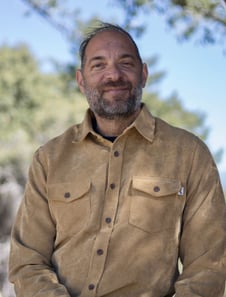
Skolnick's work has appeared in The New York Times, Outside, Wired, Lonely Planet, and Men's Health. A frequent contributor on The Rich Roll Podcast, he lives in Southern California where he was born and raised.
We spoke with the author about his writing process, the inspiration behind his debut novel, and his reverence for nature.
As an indie author, what has been your favorite part of the publishing journey?
I’ve enjoyed being hands on in every part of the process. From cover design, to choosing the fonts, to producing the audiobook. It’s made me stretch in new directions and given me so much appreciation for every part of the process and the people who make it all happen.
With such an extensive background in nonfiction work, how was your experience writing your debut fiction novel? Was your creative process similar or different to past projects?
It was similar in that there was a research phase followed by a writing phase. That’s normal for journalists. But in every other way, fiction felt foreign and much more difficult to get right. I wrote more than twice as many drafts as I ever had for a nonfiction book. I felt much more doubt, but once I felt like I found the book, the process felt familiar again.
Writing is rewriting. Fiction or non… revision is everything. And I feel like the end result is my best and most personal work yet.
How would you describe American Tiger for those readers who haven’t heard of it yet?
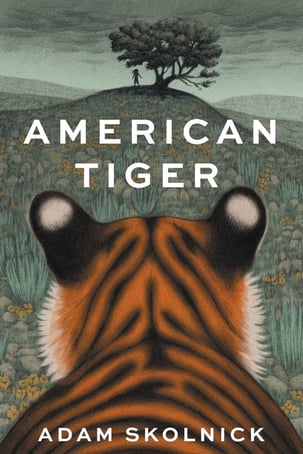
It's one of the great father-daughter stories, one that happens to take place within the search for a tiger that is suspected of lurking through a Southern California suburb. Bell Tern is a nine-year old girl who sees the world through a unique lens provided by her single dad, Jay Tern, a local game warden. Bell doesn't know anything about her mother and Jay won't share the details she craves because it's too painful. When the tiger—whether real or imagined—slinks onto the scene, once buried secrets come to light.
How did the central story or idea come to you?
It's based on a true story I covered as a reporter way back in 2005, when an escaped tiger was loose in Simi Valley, California for weeks. The game wardens couldn't find it. Some of the best trackers in the country were called in. They couldn't track it down either. My story takes place in a fictional Simi Valley, but the ecosystem and the premise are true to life.
Lose yourself in Adam’s tender and wild
debut novel American Tiger
Early reviews for American Tiger have praised your stunning descriptions of southern California nature and thoughtful depiction of wildlife. Where does this insight & reverence for the environment come from?
I revere nature. It’s my power source. It calms my heart and opens my mind. And I’m a lifelong Californian and once worked in environmental restoration here in Los Angeles. Meaning I pulled out asphalt and planted trees with kids at local schools, and worked with volunteer crews in the local mountains. That was my day job, so I spent a lot of time with arborists and naturalists who know the local ecosystem. Their lessons stayed with me.
This novel has elements of adventure, mystery, eco-lit, coming-of-age, and magical realism all mixed in. Did you always know this novel would be somewhat genre-bending, or did you discover certain pieces throughout the writing process?
The book revealed itself over time. I set out to tell a more straight ahead tale, but the story demanded something more original. I have a very organic process… I work from an outline but I allow the story to evolve. I’m not overly calculating, writing for specific audiences, but I did have the sense that it is a story that could appeal to different kinds of readers. That it could span genres. From a marketing aspect that can be challenging, and has proven a bit challenging, but the readers who have found it, love it.

A captivating father-daughter relationship is at the heart of this story. How do you craft an authentic, believable, and intimate relationship like this on the page?
Just pour your heart into the characters and let them be who they need to be.
What’s the best advice you’ve gotten from a fellow writer, and what advice would you give to a fellow author looking to create something special and meaningful?
Write like you talk. Don’t try to cook up fancy words or sentences. Simple and true is best.
What author has been most inspiring to you? What genres do you like to read these days?
Jack Kerouac. He made it cool and possible to chase ecstatic experiences and an original life, rather than following the well trodden path. His work speaks to my soul. I read all kinds of things. Popular nonfiction, naturalists, essays, literary fiction, mysteries, a touch of sci fi. I love it all.
As a storyteller across so many different styles and mediums, what do you think makes a great story across the board?
I’m a believer in the hero’s journey. There is a character who wants and needs something. Something hard to get and that’s not guaranteed. There are countless obstacles but the character believes they can do it, against all odds. And they go for it, and they get beat up. The journey costs them, yet ultimately rewards them with an entirely new way of being. In American Tiger there are multiple heroes on their own journeys. All of them seeking something.
What do you hope readers take away from your work?
That there is more potential within them than they know. And that there is much more beauty and magic in this intricately interconnected world than we grasp. It’s our job to tap our potential and find that magic for ourselves.