
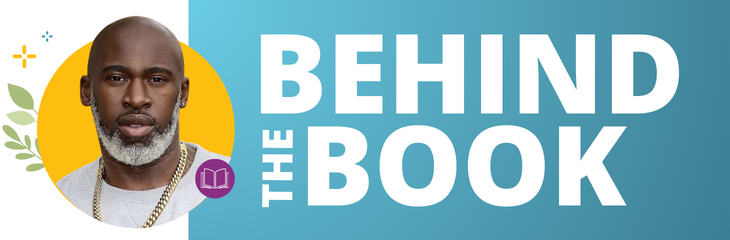
Fredi Nwaka is an award-winning British filmmaker, actor, motivational speaker, and author of Boy, a powerful new memoir. In it, he explores identity, trauma, resilience, and self-discovery, offering an unflinching account of the struggles that shaped him and the personal growth that followed.
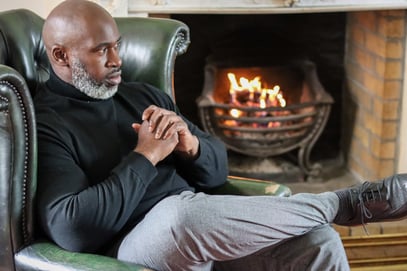
Known for transforming his lived experiences into impactful storytelling, Nwaka reflects candidly on his journey from a challenging upbringing in South London to building a career in film and community leadership. He plans to release the next installment of his memoir, Man, later this fall, with the final installment, Father, to follow.
We talked with the author about leaving behind a legacy, how adversity has shaped his life, and why no one can write your story better than you.
What inspired you to write a memoir in the first place?
You know what? I think it's legacy. You know, as you get older, you think to yourself, what can I leave for my children to know me? And one of the things that I've been kind of hooked on is leaving stories for people to read. I think back in the day people used to sit around the campfires and tell old stories, and then it passes on through the generations. And we don't really have that now. We don't have that nature of storytelling. So I thought by writing a book and talking about what I've been through, it’s legacy, right? It's etched in stone forever. So even when I'm not here, my book will probably be on someone's shelf or in someone's bag or in an attic. It'll be somewhere.
What do you think makes your experience and story connect with people beyond those who share your background?
I think my story is a universal story. It's a global story because it's a story of pain, a story of tenacity, a story of inspiration, a story of hurt, a story of love. It’s a modern-day story, but these stories transcend time. So you'll find someone in every country and every part of the world that's been through something that I've been through. And I think people have this feeling and this emotion and want something to show them that you can do more, and you can survive certain things. And I think the book will resonate with loads of people purely because we've all had adversity in some shape or form in our life. So it becomes a global story, right? Even though it's my story, you'll probably read it and find yourself in there somewhere.

Did writing about your childhood clarify anything for you about how that period of your life shaped your sense of identity and how you define success today?
Yeah, it's crazy. I mean, growing up in a place as the only Black person for years and not knowing there were other Black people. I thought I was the only one. I thought I was a white person with a tan. I never even realized that I was Black until I saw other Black people. My best friend was a guy called Robert, and the way his family took me and looked after me made me become not racist. It's weird. The things I went through on paper, most people would expect me to grow up with a hatred for white people or some kind of dislike. But the way that his family embraced me, took me in and showed me love made me grow up not feeling any biases at all. And so I feel like it kind of shaped me into the person that I am, and I would never change the things that I've been through.
I've seen so many different things from all walks of life, and it's kind of made me into the person that I am. Some of the things I went through in Kent including the abuse, just everything. It's just made me the person that I am. It's weird to think that a beautiful mindset can come from something so ugly. All the adversity I went through has not shaped me in a negative way. So I feel like I won.
Tell us about some of the work you do with young people and what that means to you.
I mean, when I came from Kent, when I moved to London, there was a period of time when I didn't understand why we're so angry, so violent, walking around with guns, knives, joining gangs, seeing things happen in front of me. I've had people die in my arms, stomachs opened up; I had to push back in stomachs and stuff like that. It didn't even bother me, didn't faze me, and I couldn't work out why these things had no effect on me. It was normal. And then when I went back into my past and my childhood trauma, I was able to identify why I felt and reacted in the ways that I did.
So using that as a tool, I go into schools or go into prisons or youth offending institutions and work with ex-gang members. Forty-five of my friends have been killed through violent crime. I've been in one of London's biggest gangs. So I utilize my past to talk to some of these young people. I'm an ambassador for a school, and I'm also their enterprise mentor. So I help them get into business, I help them follow their creative strands and it’s just a way of giving back. Back when I was growing up, we never had mentors. We never had tangible role models. We never had people that we could look at on TV and be like, “I want to be like him.” They were all superheroes, do you know what I mean? Whereas now there are real-life people that are doing well in the community that other people can aspire to be like.
So I hope that when I go into these schools and these prisons and these places, these young people can see me and be like, “You know what? You were like me, and you've made it. You were written off, but you've made it.” So I want to be like a walking role model or a walking vision of what these young people can be like.
Boy is only the first installment of your memoir. Did you always know that you wanted to separate your story into three sections, or did you decide on that structure once you started writing?
Yeah, you know what? It's a bit of both. I always knew the story's crazy, like it's so big and I just couldn't write it in one book. It was too much. Like I said, I've left out so much. I could probably do three or four offshoots of Boy and still have content to talk about. So, now my book's part of a trilogy. You've got Boy which is up to 16, Man which is 16 to 28, and then Father from 28 until present day. It works in fiction. I don't think I've ever read a memoir that's done in a trilogy, to be fair. I might be the first. That's cool.
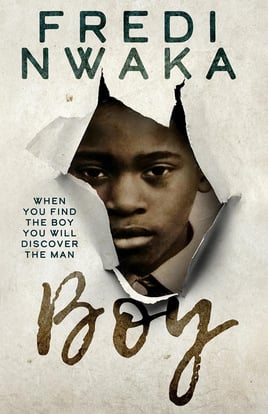
Check out the memoir behind the man: dive into Fredi’s incredible journey with Boy!
Do you have any advice for indie writers that are trying to tackle the idea of writing their own memoir?
I think just do it. Because you know what? The beautiful thing about writing a memoir is no one can be better at being you than you. No one can write your story better than you. If you write fiction, people will always compare it to other books that are similar because they have that in their head already. But when you're writing a memoir, it's your story, so they have nothing to compare it to. So just write whatever comes into your head and be kind to yourself and be gentle, because everyone has a story. And sometimes going into that space can be triggering if you've not dealt with some of the things that you've experienced.
If you're going to be honest, you end up digging up stuff that you may have buried. And that's what happened to me. I buried a lot of what I wrote about, but it was eye-opening, cathartic, and also therapeutic to go into that space. I felt like I carried this luggage for so long, walking around with this baggage of my past, and why I behave a certain way. And so writing the book was very freeing for me.
What do you hope readers feel or take away from reading your memoir and following your journey?
I feel like life is hard as it is. Like sometimes just getting up and functioning can be really hard. And I feel like I'm hoping that people will read this book and see that we’re not defined by where we are today, we're defined by where we end up. Because if I looked at where I was many years ago, I would never have thought I would be here. I'm an award-winning film director, producer, actor. Now I'm a published author, I'm a mentor.
My teacher said I'd be dead by 21. You know what I mean? So to have achieved all this stuff, it just goes to show that you're not defined by where your journey starts, but you're defined by where your journey ends. So I want people to read it knowing that if they want to do something, they can. I don't do "ifs", just purely "hows" and "whens". I want people to have that mindset. Like, you know what? If you want to do it, you can do it.
Don't let anyone tell you that you can't, and just get on with it. Crack on and get it done.