
Greg Cope White is a former sergeant in the U.S. Marine Corps, an author, and a film and TV writer and producer. His memoir, The Pink Marine, has been adapted into a Netflix series (Boots, with a Rotten Tomatoes score of 90%), for which White serves as a writer and Executive Producer.

A passionate advocate for LGBTQ+ and veteran rights, White is featured in the PBS docuseries American Veteran and published in the military journal Zero Dark Thirty. An avid cook, his writing led to contributing for HuffPost and hosting a show for Food Network. His screenwriting credits include three Netflix original films and projects for HBO, CBS, NBC, Disney, Fox, and Sony. White is a bi-coastal, polo-playing, sixth-generation Texan with a voracious appetite for life.
We talked with the author about what inspired him to write about his experience in the Marine Corps, what it was like having Norman Lear as a friend and mentor, and what he's working on next.
What made you choose the indie publishing route, and what has been the best part of being an indie author?
I initially went the traditional route. My agent negotiated a deal, and I assumed that was the gold standard. It didn’t take long to realize the publisher wasn’t right for my book—or for me. While on book tour, I had a heart attack. I cancelled the contract, contacted Justine Bylo, formerly of Ingram, and she guided me through IngramSpark. Within days, my partner re-formatted my book, and it was back on the shelves under my new imprint. I got back on the road to finish the tour.
Tragedy can lead to heartbreak or breakthrough. I learned independent publishing can be both creatively freeing and financially smart because I’m not handing over the keys to someone else. The best part of being an indie author is ownership: the voice, the decisions, the timeline, and the relationship with bookstores and readers. It’s a lot easier to steer when my foot is on the gas.
Bottom line: I’ve looked at book life from both sides now and, thanks to IngramSpark, know that self-publishing can be much more profitable.
What originally inspired you to write The Pink Marine, and how did you decide how vulnerable and honest to be in your writing?
I circled my desk for years trying to figure out the best way to tell this story. Then I kept seeing headlines about bullied kids taking their own lives, and I knew it was time. I had lived through a world, both in childhood and in the Marine Corps, where cruelty was sometimes treated like character building. I learned the hard way that the person who mattered most was me, not the guys trying to break me. I wanted to write a book that gives power back to people who feel less-than and reminds them that bullies do not get the final word.
When it came to vulnerability, I made a rule: if a moment served the reader and the emotional truth, it stayed. If it was there just to shock, punish myself, or settle a score, it went. My copy editor, Nicole Klungle, was key in helping me do that with intention. She guided me in using details from my childhood and Marine Corps training to support the transformation from a scared kid into a lean, green fighting machine, while making sure the humor did its job. Humor is how I survived, and it helps the truth land. If the book works, it’s because the truth hits, and the humor keeps you turning pages.
If I can stress one thing to other indie authors, it’s the importance of hiring a copy editor. Not Nicole though…we’re busy on my next book.
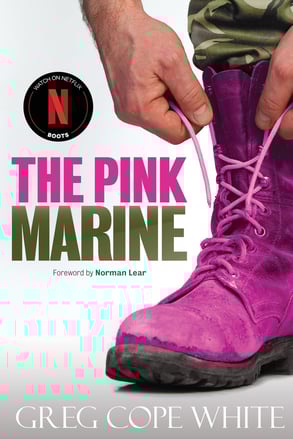
Experience the inspiring memoir that became a hit Netflix series!
How did your military experience shape your view of masculinity, identity, and belonging? How do you reconcile love for the Marine Corps and your personal challenges associated with that time?
The Marine Corps taught me about discipline, pride, and the strange comfort of a world where the rules are clear and the standards are high. It also taught me how masculinity can become a costume you're afraid to take off, convinced the room will turn on you the second they see what's underneath. At the time, the message was clear: if you were gay, you didn't belong. In practice, I proved to myself that I could do the work, earn respect, and claim my own place.
I am grateful for what the Corps gave me: purpose, toughness, and a sense of earned belonging. I'm also honest about what it cost. I hid my sexuality to serve my country, and that secrecy shaped me. It didn’t erase me; it showed me how to endure, how to focus, and how to bet on myself. That confidence followed me out of uniform. I wrote this book without much formal education, but with a stubborn belief that my story mattered. The only thing I lost was fear. Loving the Marine Corps doesn't mean pretending it was perfect. It means I can respect what it gave me and still tell the truth about it.
I wrote this book without much formal education, but with a stubborn belief that my story mattered. The only thing I lost was fear.
How did the opportunity come about to adapt your memoir into the breakthrough Netflix series Boots, and what was the most meaningful part of that experience?
I’m an author and a TV writer who believed in my story but was never alone. Coming into books from television taught me something useful: there is no sure thing. Even with representation, a project doesn't “happen” because you wait. It happens because you know the story has legs, so you package it and keep pushing it into the light. That said, the most meaningful part was watching something deeply personal become a shared creative mission.
Sitting in a room with talented people who treated my younger self with care was powerful, especially with Norman Lear involved. He wrote the book’s foreword, produced the show, and was also my friend, mentor, and champion. With that support, we built a team of producers and writers, then took the project out to buyers. After Netflix won the bidding war with Apple, the real work began: turning my life into a series.
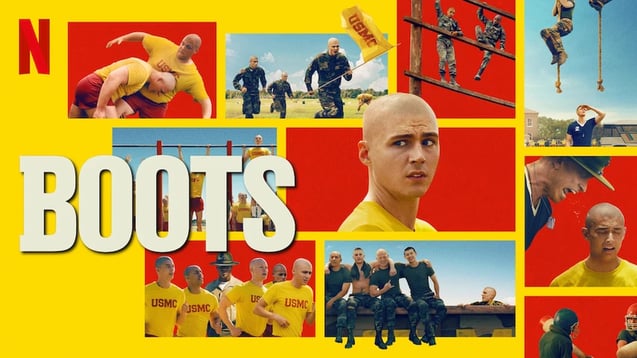
There’s a scene I wrote in the book and again in Episode 4 that still hits me. At a moment of extreme doubt, the Drill Instructor who challenged me most screamed, “Stop thinking of yourself as less than.” No one had ever taken a chance on me, a kid who was easy to overlook, much less handed me a solution. The shock was that the solution was mine to enact. That's why the scene is special to me: it was the first time someone named the lie in my head and demanded I stop living by it. That moment changed my life, and it shaped everything that came after.
Moments like that are why the story resonates. It’s tough, funny, and it leaves people feeling stronger than when they started. When we shot that scene, my best friend, who appears in both the book and the show, happened to be visiting the set. Watching it come to life, the actors, the director, the crew, and the two of us turned into a sobbing mess.
How was your experience dramatizing certain events, characters, and even the timeline for the show? Did that make it easier to work on and separate from your own past, or was it difficult to shift from the truth?
I’m a writer on Boots, too, so my time in the room vacillated between long shots of me throwing myself over my book to protect its precious body, and closeups of me gleefully lighting the fuse on the bomb beneath it, blowing up a story point for the good of the show.
The adaptation process is a little like grocery shopping. We wheel a cart down the aisle of my life, grab what we like, and leave what we don’t. At times I wanted to chase my fellow writers with a box of sugary cereal, begging them to see the value of some small element I loved.
Shifting the timeline ahead 10 years was no problem. The Corps is the Corps no matter the date. I served in the 80s, a time of peace, thankfully. Moving it to the 90s let us include Don't Ask, Don't Tell, and it set up combat for Season 2. The toughest loss was the title. We all loved The Pink Marine, but the series needed something that reflected the ensemble. We pulled on our Boots. Forward march.
Was it easier or harder than the memoir? Both. Structure creates distance, which can feel like protection. Then an actor says a line you lived, and the distance disappears. Dramatizing is its own kind of truth: you compress time, combine moments, and reshape events, not to lie, but to make the emotional truth land in a scene.
Why do you think your story has continued to resonate so strongly with audiences since you released it almost 10 years ago? How do you think your story has contributed to discussions of queer representation in the military?
I think the story keeps resonating because it’s about belonging, the universal hunger, and it’s told with humor that doesn't dodge pain. People can handle a lot when you make them feel safe enough to keep turning pages. The military setting raises the stakes in a way that’s instantly understandable. When the culture demands toughness, the fear of being “found out” becomes its own battlefield.
As for representation, I hope the story adds nuance. Queer service members aren't a headline or a debate topic. We’re people wanting to serve our country, trying to fit, trying to be proud without disappearing. If the book and the series open the door to more complicated, human portrayals, where courage includes vulnerability and belonging doesn't require self-erasure, then it's contributing in the way I care about most.
And it helps that most of the characters are real. These are people who changed my life, and the story lets readers watch them change mine. Everyone loves a transformation, especially one that is earned.
What do you think your younger self would say about your memoir now being widely beloved and adapted into a major television show?
First, don't tell him he’ll be living boot camp over and over for decades. But he would be blown away by the idea of being seen, when so much of society told him to disappear.
Mostly, he’d be proud that his story mattered enough to him that he taught himself how to write it and carved out a place in the literary world. He wouldn't know what to do with the fact that millions of people connected to something he made. He’d probably laugh, panic, deny it, and then bake some cookies.
And then he’d do what he always did when cornered: keep going. He’d learn that he can do anything he sets his mind to. And he’d finally understand this: taking his place isn't something the world grants him. It’s something he claims.
What project are you working on next, and what can you tell us about it?
I’m working on the next book, which picks up where the first one and the series leaves off, right after graduation. If The Pink Marine is about becoming, this one is about staying yourself once the Boots come off. I wrap up my time in the Corps, land in New York City, and eventually Los Angeles, and you get the unfiltered version of what it looks like to build a self from scratch and stumble my way toward becoming a writer.
It’s funny and honest, with the same mix of humor and heart. Full of true stories of ambition, reinvention, and the ridiculous things we do to chase success. And yes, if you thought the first book was a cautionary tale, buckle up. The Marines were only the beginning.
What lasting impact or perspective do you want your work to leave with readers?
I hope readers walk away with three things.
First, a feeling. Not "inspiration-poster" inspiration, but the quieter kind that shows up later when you’re alone with your own thoughts. The feeling that you're not “too much” or “not enough.” The feeling that you have a right to take up space.
Second, permission. Permission to question the rules that were handed to them about masculinity, shame, and belonging. Permission to stop auditioning for approval and start building a life that actually fits.
And finally, a tool. I’m not interested in telling people to “be brave” as if bravery is a personality type. I want to show them how it’s done in small, specific moments: tell the truth, keep your sense of humor, and refuse to live as less than. If my work does its job, readers will laugh, wince, recognize themselves, and walk away a little steadier on their own two feet.