

Ally Walker was a budding biochemist with a BA in biology from UCSC when she stumbled into show business. The Light Runner, a gripping psychological thriller, is her first novel, and the first installment in her Realities series.

Spotted by a producer in a Los Angeles eatery, Walker was cast in a small film and continued to make her name as an actress for the next 30 years, starring in Profiler, Universal Soldier, While You Were Sleeping, and Sons of Anarchy, to name a few. She produced and directed an award-winning documentary on LA County’s foster care system, then penned and directed the film, Far More, which won Best Screenplay at the Milan International Film Festival.
She lives in Los Angeles with her husband, three boys, and two unruly bulldogs.
We talked with the author about how her background in acting and directing influenced her writing, why she's attracted to psychological thrillers, and what advice she'd give indie authors.
What drew you to independent publishing, and what's been the most surprising part of your journey into a debut author?
I have always enjoyed the writing process. I cut my teeth on narrative writing by editing and writing screenplays. I guess the most surprising part of my journey in becoming a novelist is how freeing it has been. Screenplays are very bare bones, and the cast, director and producers all add their spin to the script, so it is a much more collaborative field. When I was writing The Light Runner I was free to communicate everything I wanted to about the characters—how they spoke, moved, felt—without anyone's input until editing, which was still pretty respectful of my vision. It was wonderful. As far as publishing the book myself, I feel it's allowed me to understand all aspects of the publishing world. Some of it has been frustrating, but overall it has been a wonderful learning experience.
How has your background in acting and directing informed your creative process as a writer?
Acting has taught me character development on a very visceral level. Directing taught me rhythm and structure; how each scene moves the story forward visually and emotionally. When I write, I "see" every moment play out like a film. I play each part, feel what the character feels, and know why they are doing what they are doing. So writing is a very immersive experience for me, and hopefully for my reader!
How did the idea for The Light Runner come to you, and did you always know it would be somewhat genre-bending in form?
I always knew it was genre-bending. That's just the way my brain works. I suppose I have always noticed coincidences and patterns in my life and have thought they held the key to some kind of deeper meaning. I believe that we are here to learn from our very difficult times, such as death or illness and, like many, have tried to find meaning in those things. Connecting the spiritual realm and quantum mechanics seemed logical to me because I believe they are connected. So I decided to try and create a step-by-step murder mystery - because thrillers are my favorite - but with a whole other world happening all around it, giving it greater depth and urgency. At first, I wrote it as a TV series because that was what I knew how to do, but no one seemed to want to buy my idea. So I decided to write it as a novel which, ultimately, was much more rewarding.

From the perspective of a seasoned storyteller in so many different forms, what do you think is the most important component to a compelling story?
The truth. People can feel when a story is emotionally honest; when it's written from a place of deep curiosity, pain or hope. The truth is what keeps people turning pages or sitting in a theater long after they should have gone home.
Any behind the scenes stories you can share about creating The Light Runner?
When I get bored or lonely, I tell myself stories. I have done this since I was a kid. I'm not exactly sure where they come from or why I do it, but I just do it. Creating The Light Runner was the same kind of journey. One, I started by sitting on a couch and staring at the walls. And as I sat there, the story seemed to just channel itself to me. I remember my best friend and writing partner, Rick Cowan, who died in 2006 always telling me to "write what I know.” Strangely enough, sitting on that couch and weaving things I'd experienced and people I'd known into this story was something I just knew how to do. Sometimes it pays to just get quiet and tell yourself a story.
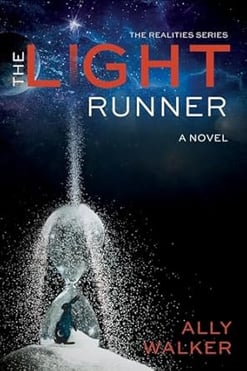
Your book is lauded as an edge-of-your-seat psychological thriller. What attracts you to this genre, and do you think you're more aware of elements like pacing because of your performance background?
Absolutely. As an actor, you learn that even villains think they're heroes. That duality fascinates me. I'm drawn to psychological thrillers because they dig into the unseen parts of the human mind, the contradictions, the lies we tell ourselves. My performance background has definitely made me more attuned to pacing: I feel when a scene drags or when silence is required instead of another line of dialogue. Or at least I think I do!
Get lost in the world of Bainbridge Psychiatric Hospital, and unravel the haunting mystery of The Light Runner!
This is the first book in The Realities Series. What can you tell us about the next installment?
I have been working on the second book - you know, sitting on my couch and staring at the wall! Ha! I don't want to say much. I will say it is a completely different situation with different characters although one or two are the same....sort of.
How has your experience been connecting with fans of this book?
Extraordinary. I've had people tell me that they believe that similar concepts govern their own lives and that they see themselves in some of the character's trauma or resilience. That really means a lot to me and I am deeply indebted to these folks. I have been particularly touched by the support of my Sons of Anarchy fans who have been outspoken advocates of the book. My fans have always gotten me through things and been there for me, and I am deeply, deeply grateful for their love.
What piece of advice would you give aspiring indie authors?
Own your voice.