
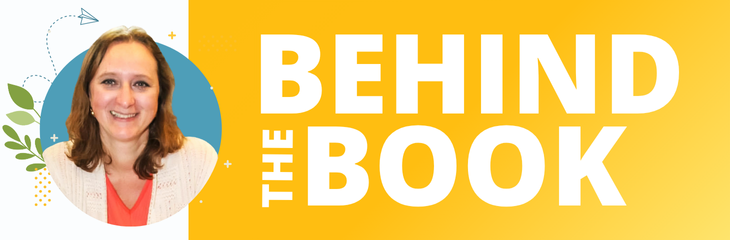
Marta Molnar is the bestselling author of the Light and Life Series including The Secret Life of Sunflowers, Girl Braiding Her Hair, and Raising the Titanic which released earlier this summer. She wants her books to inspire motivate, and leave readers with an "I can do anything!" feeling.
-jpg.jpeg?width=260&height=266&name=Marta%20Molnar%203%20(1)-jpg.jpeg)
Molnar is an art history enthusiast and a self-taught artist whose passion is writing about amazing women forgotten by history. She studied writing at Seton Hill University and (briefly) at Harvard University. She lives in Philadelphia with her family and brand new puppy, Buddy.
We talked with the author about what drew her to writing historical fiction, how her books have come to be somewhat prophetic of her own life, and why connecting with fans is her favorite part of the process.
What inspired you to pursue independent publishing, and what do you see as the greatest advantage of going indie?
In the spirit of complete honesty, nineteen and a half editors rejected The Secret Life of Sunflowers. I say half, because the last editor neither rejected it nor accepted it; she was still thinking about it when I finally decided to self-publish. The manuscript had been making the rounds for close to two years by that point. Traditional publishing has huge advantages, but it's also very slow and 100% out of my control. Once I had full control over my book, publication, and marketing, I very much liked the speed with which I could move everything forward. I have the kind of brain that's geared toward puzzles and problem solving, so I enjoyed the process of experimenting. I have learned a lot about writing and publishing in the past few years, and that is valuable knowledge that will help me with future projects as well. I also appreciate the amazing partners I found during this process, such as Ingram! I'm not saying that self-publishing is the right choice for everyone, but it's heaven for control freaks.
Traditional publishing has huge advantages, but it's also very slow and 100% out of my control. Once I had full control over my book, publication, and marketing, I very much liked the speed with which I could move everything forward.
If you could offer any piece of advice for aspiring indie authors, what would it be?
Start slow, gain expertise, then build on that experience. Your book doesn't have to be on all platforms, in all formats, and in half a dozen languages right out of the gate. Find your community online and build the right team. There is so much amazing advice available for free on Facebook and other social media author communities. Don't forget to work on your writing. Once that first book is out, we tend to switch over to obsessing about the business side of things, but readers don't care about any of that. They just want a good story. Keep working on your craft. The best advertising is when a reader tells all their friends how much they loved your book. Writing is the priority. Always.
You've built a diverse portfolio of writing and publishing across multiple genres. What drew you to explore historical fiction at this stage in your career?
I wrote over 50 books under a different pen name, most of them romantic suspense and romantic thrillers. Then Covid hit, and I watched on TV with the rest of the world as all those bodies were being carried out of houses and the refrigerator trucks for the dead. A close friend lost her husband. So much terrible tragedy. I couldn't and didn't want to write any more murder.
Pulitzer Prize winning author Norman Mailer once said, "Every one of my books has killed me a little more." That wasn't what I wanted for myself. A reader can read a thriller in a day or two. The author has to spend six months in the head of a serial killer. It became too much. Going forward, I wanted to be able to say, "Every one of my books healed me a little more." I wanted to write books that heal, inspire, and motivate. When my readers finish the last page, I want them to feel like they can do anything. And so that's what I did. And luckily, readers responded to my new stories.
And I love history. I love reading or watching anything historical. Every once in a while, I see something where I can't believe it's the first time I'm encountering this information. Like how isn't everyone talking about this? I love digging deeper into interesting topics. As an author, I can't resist a good story.
Your three most recent books form the Light and Life Series, each shedding light on women whose stories history has largely overlooked. What motivated you to create this series and bring these voices to the forefront?
I was watching a documentary about the Impressionists when I first heard about Johanna Bonger. She sounded amazing, and I couldn't believe I'd never heard of her before. She made Van Gogh famous! I started looking into her life, and the more I read, the more I wanted everyone to know her. I found her story encouraging and inspirational. If she could achieve all she achieved a hundred years ago, I can surely reach my goals too, right? Vincent only sold a single painting during his lifetime. When he died, his brother Theo inherited his art, but Theo died six months after Vincent. So there was Theo's 28-year-old wife, Johanna, widowed with a baby, in a foreign country, with 200 oil paintings and dozens of drawings nobody wanted. She had to figure out how to survive, and in a hurry. And she did. How is that for a compelling story?
My second book in the series, Girl Braiding her Hair, is about Suzanne Valadon who painted at the same time as all the famous Impressionists. She was even friends with the Van Gogh brothers in Paris. She was raised by a single mother in poverty, forced to work from an early age. By the time she was 15, she'd been a horse walker, a funeral wreath maker, and a circus acrobat. When she fell from the trapeze and broke her back, she ended up modeling for the prominent artists of the time. And while they worked, she watched and learned. She became as famous as any of them, and more financially successful than most. She raised a son and taught him how to be an artist too. But when she died, the papers simply said: Suzanne Valadon, wife of artist, mother of artist, died yesterday. She literally died at her easel after a decades long brilliant art career! And they just couldn't give it to her that she was an artist too. So, of course, I had to write about her.
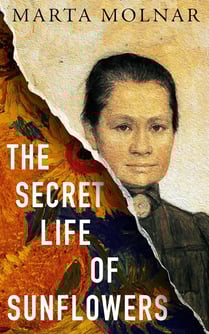
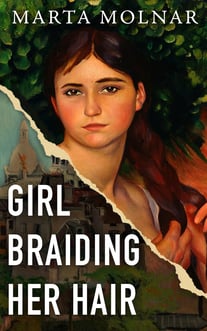
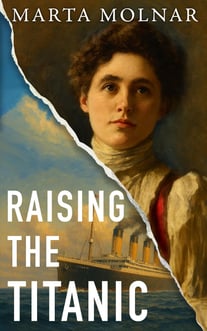
Journey back in time with Molnar’s series of engaging, inspiring historical fiction reads – check out the Light and Life Series!
There’s a strong connection to the art world in your work. What’s your relationship to art, and what makes it such a compelling setting for your stories?
I'm an amateur artist. My work has been exhibited a handful of times, but I have never sold a painting yet. Or, as I like to tell the story, I've only sold one fewer piece of art than Van Gogh. Honestly, I'm right behind Vincent.
All three books in this series employ a dual timeline structure, weaving together narratives set in the historical past and the present day. How did you settle on this approach, and why do you think it suits these stories so well?
Since I've been around the publishing block a few times by the time I started this series, I knew finding an audience is important. Was there an audience for my story? I researched recently published historical novels and found that WWII fiction is the hot trend, and Regency romances set in England are experiencing a boost from the Bridgerton TV series. My story didn't fit either sub-genre. I wasn't sure if anyone would pick up Sunflowers. After all, my proposition was: "Please read my book about this Dutch woman you've never heard of who lived a hundred years ago."
I thought a modern-day heroine could be more relatable. She would draw readers into the story and be their tour guide into the past. And as soon as I started to write about her, it became immediately obvious that this was the right decision. It felt right on every level and made the story much more layered, with wonderful little echoes between the past and the present.
What’s something readers might not know about the process of bringing the Light and Life Series to life?
Okay, so there's this weird thing. Some of the plot I write into books tends to happen later. In the first book I ever wrote (which was never published), the garage door fell on the heroine's shoulder and broke her collarbone. A month later, I broke my collar bone in an accident. In my book Raising the Titanic, the heroine breaks her ankle the night of the sinking, as she jumps into the lifeboat. While writing the book, my husband and I went hiking, I fell and broke my ankle. Right now, I'm sitting here with my ear pounding. I just got home from having stitches removed. I had to have two weird growths taken off last week. I was joking with the doctor that I'll probably end up losing the ear, since I've recently written a book about Van Gogh. Or when I wrote a secondary character with an unusual name, that I don't even know where I heard or read. Six months later, someone with that name showed up in our lives and became a close friend of the family. My husband demands that in the next book I write, the heroine must win the lottery.
How has your experience been connecting with fans of your work over your newer books?
This part has been the absolute, absolute best part of the whole experience. I have met so many amazing people and made so many friends. Here is the latest example... In Girl Braiding her Hair, my modern-day heroine wants to establish a Museum of Unseen Art. Museums only have about 4% of their collection displayed. The rest is in the basement. What a terrible waste! So, my heroine's idea is to establish a museum with no permanent collection, empty space that would borrow and display art that is hidden away in other, bigger museums. A lovely gallery director contacted me from Maryland recently, and she is going to work on this, planning an exhibit for next year. So, there's another piece of a book coming true! I cannot wait to see this.
What do you hope readers take away from your books?
You can do anything! Go after your wild ideas. Hold on to your passion. Live your dream, not just for yourself, but because when you do, other people will see that living their dream is also possible. Let's lift each other up. Yes, we can!