
Inspired by the works of Emily St. John Mandel, Stephen King, and Audrey Niffenegger, M. Kevin Hayden’s debut novel, An Old Soul is a slow-burn mystery of love, memory, and unraveling reality, set against the backdrop of 1996 Chicago.
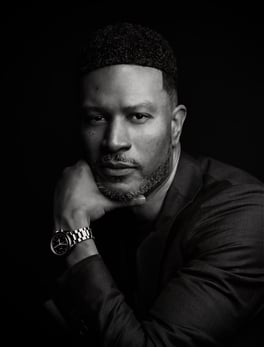
We talked with him about his creative process, his views on technology, and his upcoming literary horror novel.
What got you started in writing, and what inspired you to publish your first book this year?
Life took a turn. Depression and burnout settled in. I felt like I had wandered to the middle of a long, cold tunnel, unable to see light at either end. In July of 2024, I took a solo retreat to a remote area, where I sat in silence and listened. I heard the distant wind rush through the trees moments before reaching my face, squirrels scraping up the bark, and a chorus of birdsong that no longer blended into one blur of sound but unfolded like a symphony. Each bird having its own part to play in forming the whole. Most importantly, I listened to myself. I opened my laptop, thankfully without internet access there, and began to write what became the beginning of An Old Soul. The story unfolded in strange and beautiful ways, revealing itself piece-by-piece in synchronous ways. It almost felt that it was being handed to me by something conscious, yet unseen. The words gave me new people to meet and new places to escape to. I wrote for several hours a day, with stiff knees as my witness. Before long, I had a story.
An Old Soul is a genre-bending novel that blends elements of science fiction, romantic fantasy, and speculative mystery. How did the unique idea for this story come to you, and do you always tend “break the rules” of genre in your work?
I feel that stories arrive from somewhere, and my job is simply to transcribe them. That’s it. Cut and dry. What matters to me is telling the story as it comes, regardless of genre expectations. Following a formula or fitting a mold runs counter to why I sit at the keyboard in the first place. The freedom to express what’s inside me can’t coexist with forcing a story into something it’s not. These tales choose their own shape. I am grateful for the privilege of seeing them and telling them. The partnership with my muse is delicate. I never want to break that bond.
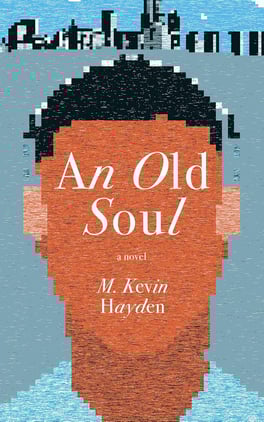
An Old Soul came to me as an idea I thought was cool and timely, something that spoke to this moment in human history. I actually intended to write a completely different story, one that fit neatly into genre expectations. But the story began to breathe and took on a life of its own. At times, I found myself handing over the keys to the characters. Stories, like angsty teenagers, often want to live a life of their own. The reward for letting go was the obliteration of writer’s block for me. Of course, not all surprises were romantic. The revision and editing process turned out to be more tedious and consuming than I expected. But in the end, that’s where the story actually becomes the story.
Take a nostalgic journey through 1990s Chicago in this imaginative blend of sci-fi and romance.
What is the most unique part of your creative process?
Certainly not unique, but I can’t write without music. Lyrics, melodies, even the tempo of a song help unlock the words. As I write this, trying to stay awake after a night shift, I’m listening to “Soul Makossa” by Manu Dibango. One other thing I do that might be a little more unique is shine a ceiling planetarium projector above me. Stars on the ceiling, words on the page.
As a debut author, what attracted you to the independent publishing process?
Self-publishing gave me something I couldn’t walk away from: total creative control. If we can produce books that rival traditional quality, and now we can, why not go indie? The tools and talent exist to create something truly beautiful and professional. That said, it’s not for everyone. You’re a small fish in a vast ocean, and the process can be overwhelming. It demands time, energy, and a willingness to step away from writing to don other hats to get the book out there. There can be letdowns on the indie path, and chasing the unreachable perfection your story deserves can be exhausting. But nearly every author is deeply invested in their work, and willing to push through with the hopes of the reward of new readers. Of course, the traditional publishing route may take a huge load off, and the learning curve eliminated. A team of people can whip your pages into a stunning package but those same resources are now accessible to most of us now. There are talented professionals and freelancers everywhere. You can present a shining gem to the world on your time, and with your own vision.
"Self-publishing gave me something I couldn’t walk away from: total creative control. If we can produce books that rival traditional quality, and now we can, why not go indie?"
What aspect of the IngramSpark platform or publishing experience did you find most useful that you would encourage another fellow author to use?
Honestly, the most useful part of IngramSpark for me has been the ability to get my book into the world with real reach. The global distribution to bookstores, libraries, and online retailers gave An Old Soul a chance to be discovered in places I would’ve never reached without IngramSpark. Their promotional options are also a huge plus. It’s like putting a message in a bottle and knowing it has a better shot of washing up where you hope. Also, the quality of the printed books is unmatched. We pour our hearts on these pages. IngramSpark prints them into something you can be proud to hand to someone. That matters. So if you’re a fellow indie author, use the tools, take the time, and let your story find its way.

You like to explore the idea of technology as a foil to connection in your work—what do you find interesting about that idea, and why do you think it resonates with readers?
I truly believe that despite being of human creation, technology often runs counter to the essence of what makes us human. It can make life more convenient and pacify the ache of loneliness, but it rarely fills it. At best, it simulates connection. At worst, it blinds and deafens us to it, even when it’s just a few feet away staring into a glowing screen. Technology has been used to scream in our faces and tell us how to feel, all while quietly leaving us empty. We can have millions of followers, craft curated digital selves, and still feel hollow because deep down, we sense the chasm it can create. We sense it in every moment it leaves us feeling that we’re not good enough, and every dopamine drip masked as intimacy. I do believe tech should be used to ease burdens and solve real-world challenges, which may free us to pursue deeper connections to each other. But I don’t think it can ever replicate the universal bond we truly long for. We can code addiction, provoking chatbots, and uncannily beautiful landscapes. But we can’t code the divine slow dance of true connection: to each other, to our planet, and to everything that swims, flies, or creeps across it.
What can you tell us about your upcoming release, Willow Rose?
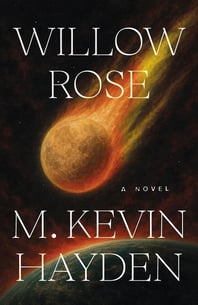
Willow Rose (9798992780550) is a story that came knocking. First gently, then insistently. A forceful pounding that I couldn’t ignore. It’s a supernatural, literary horror novel set in the snowy woods of northern Minnesota, where a burned-out and broken doctor finds himself at the center of something stranger than most “normal” people could ever imagine. The story explores grief and recovery, deep wounds and healing. There’s a Windigo, yes, but heart is at the center. It’s deeply human, and maybe a little cosmic too. Like An Old Soul, it also doesn’t fit neatly into genre. I didn’t write it to follow trend. I wrote it because it wouldn’t let me go until I did.